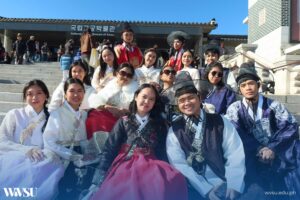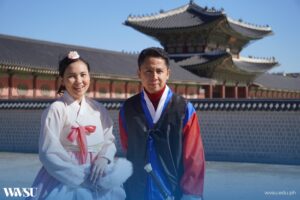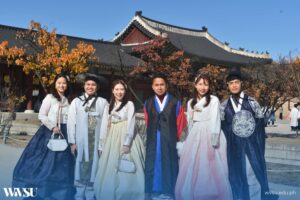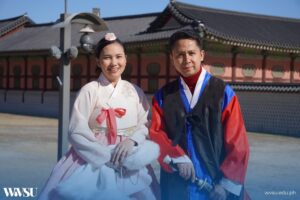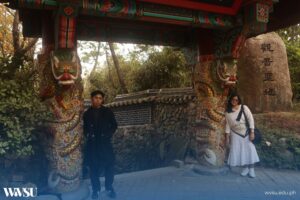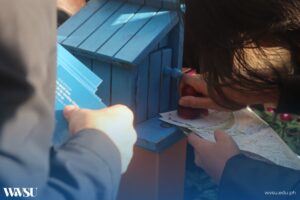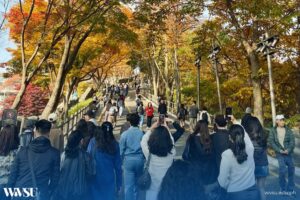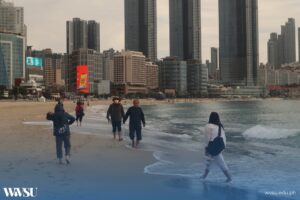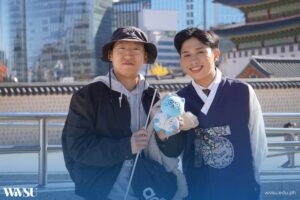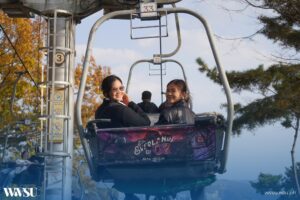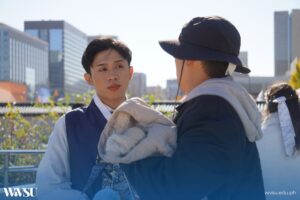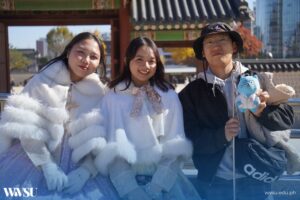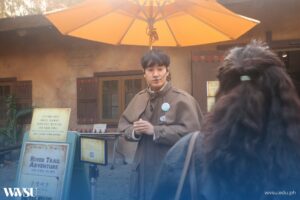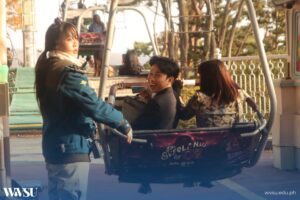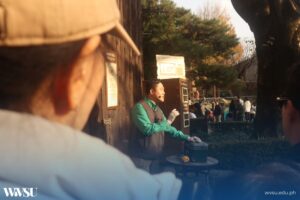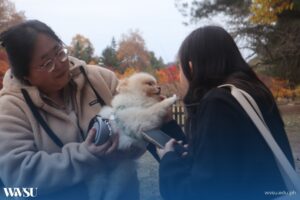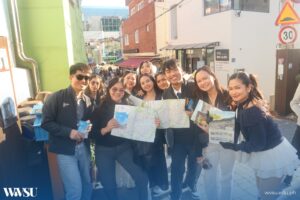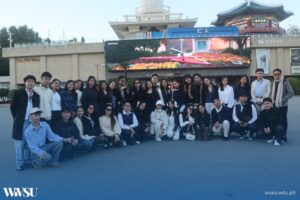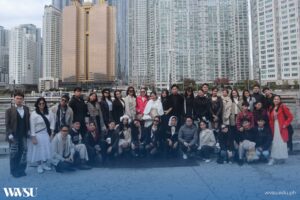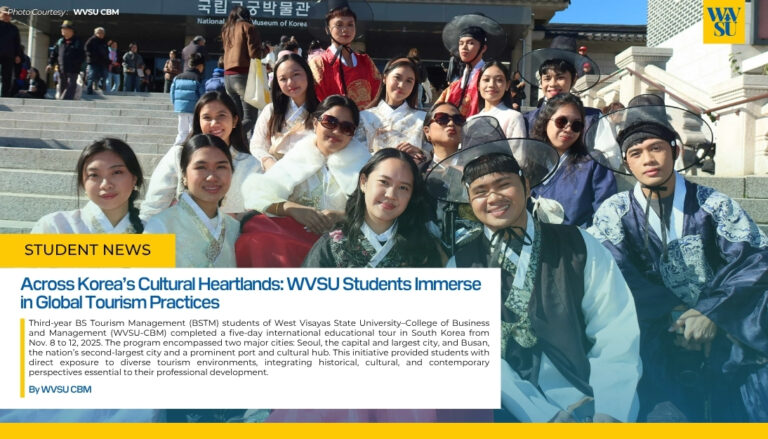
Third-year BS Tourism Management (BSTM) students of West Visayas State University–College of Business and Management (WVSU-CBM) completed a five-day international educational tour in South Korea from Nov. 8 to 12, 2025. The program encompassed two major cities: Seoul, the capital and largest city, and Busan, the nation’s second-largest city and a prominent port and cultural hub. This initiative provided students with direct exposure to diverse tourism environments, integrating historical, cultural, and contemporary perspectives essential to their professional development.
In Seoul, students visited Gyeongbokgung Palace, deepening their understanding of Korea’s dynastic history and traditional architectural heritage. The tour also included Bukchon Hanok Village, a well-preserved neighborhood of traditional Korean houses. Here, students observed efforts to maintain cultural identity amid rapid urban modernization, gaining insights into the role of heritage preservation within an evolving metropolitan context.
The itinerary in Busan emphasized historical learning and community-centered tourism development. Students explored Haedong Yonggungsa Temple, a renowned seaside temple celebrated for its scenic coastal location and architectural beauty, illustrating the integration of natural landscapes with historical and spiritual significance. They also visited Gamcheon Culture Village, a post-war refugee settlement transformed into a vibrant “open-air museum” through public art initiatives and community-led revitalization. These sites exemplified the contribution of creative placemaking and grassroots participation to sustainable tourism development.
The program further highlighted the intersection of sustainability and community-based tourism through visits to Nami Island and Haeundae Beach, where environmental stewardship and active community involvement are central to destination management. Observing these practices firsthand reinforced students’ understanding of sustainability as a critical principle in contemporary tourism management. Interactions with local residents and tourism professionals also enhanced their intercultural communication, cultural sensitivity, adaptability, and responsible travel practices.
Ultimately, the international educational tour exemplifies WVSU’s commitment to providing experiential learning opportunities that broaden students’ global perspectives. By examining how South Korea balances heritage preservation, community engagement, and sustainable tourism, students developed competencies necessary for professional excellence. The experience prepares them to become culturally aware, competent, and future-ready tourism professionals capable of contributing meaningfully to the global tourism industry.
#WVSUTransformingGenerations#WVSUexcels
Text and photos from WVSU CBM