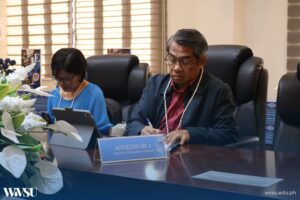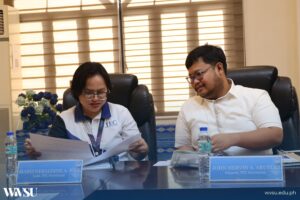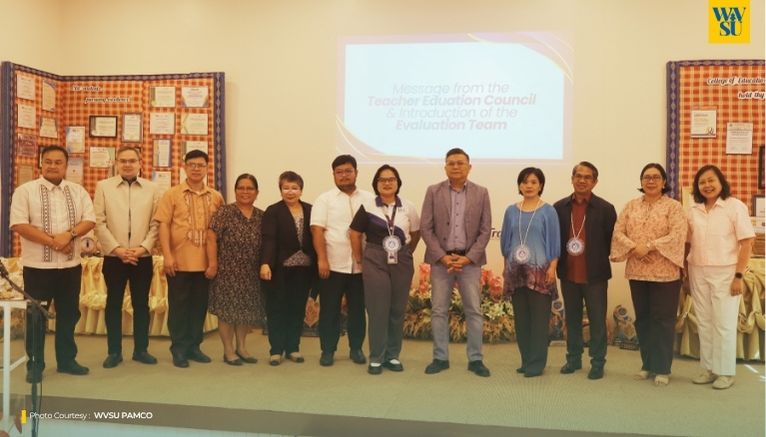
West Visayas State University commenced the first day of the 2026 Teacher Education Centers of Excellence (COE) Identification and Designation Field Visit on May 12 at the university’s main campus as part of the national assessment process under Republic Act No. 11713, or the “Excellence in Teacher Education Act.”
The evaluation, conducted by the Teacher Education Council, seeks to determine whether teacher education institutions continue to satisfy the standards for Centers of Excellence in instruction, research, extension services, faculty qualifications, student support, and graduate outcomes.
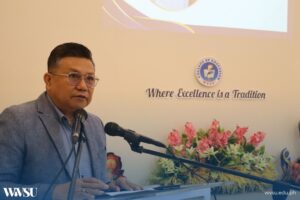
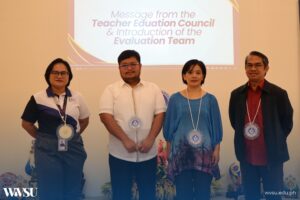
The activity opened with a team huddle, courtesy meeting, and opening program attended by WVSU President Joselito Villaruz, university officials, College of Education administrators, and members of the TEC Field Visit Team.
In his message, Villaruz reaffirmed the university’s commitment to advancing teacher education and sustaining academic excellence. “At West Visayas State University, our vision is to remain a premier institution that produces educators of the highest caliber. For us, the pursuit of the Teacher Education Center of Excellence is a legacy of service to the nation and our pursuit of innovation in pedagogy,” Villaruz said.
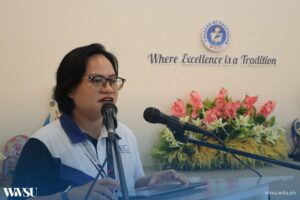
TEC Secretariat Lead Mariz Geraldine A. Jose likewise underscored the purpose of the on-site evaluation during the opening activities. “The purpose of this field visit is to validate and further assess your institution’s submission in relation to Teacher Education COE criteria,” Jose said.
“We would also like to emphasize that this process is evaluative and developmental. While we are guided by the established criteria and scoring requirements, we also aim to surface institutional strengths and identify areas for further improvement,” she added.
In accordance with the provisions of RA 11713, the assessment included the validation of institutional practices and resources supporting quality teacher education and the professional preparation of future educators. Assessors reviewed documentary exhibits and institutional records presented by the university to verify compliance with COE criteria established by the Teacher Education Council.
Classroom observations involving Bachelor of Elementary Education and Bachelor of Secondary Education classes were also conducted to evaluate curriculum implementation, instructional delivery, and student engagement.
The TEC assessment team likewise inspected major university facilities, including the Smart Classrooms in Quezon Hall and the College of Information and Communications Technology, the University Learning Resource Center (ULRC), the Central Science Laboratories, the University Research and Development Center, the Integrated Laboratory School, and College of Education facilities to assess the adequacy and utilization of academic and research resources.
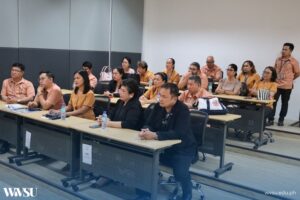
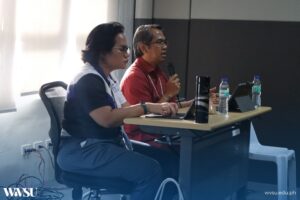
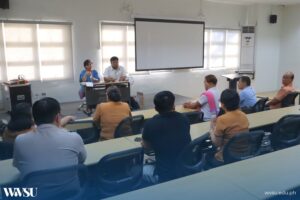
The first day of the evaluation concluded with separate meetings involving university administrators and faculty members to validate governance structures, academic management, teaching practices, and faculty participation in program delivery and development.