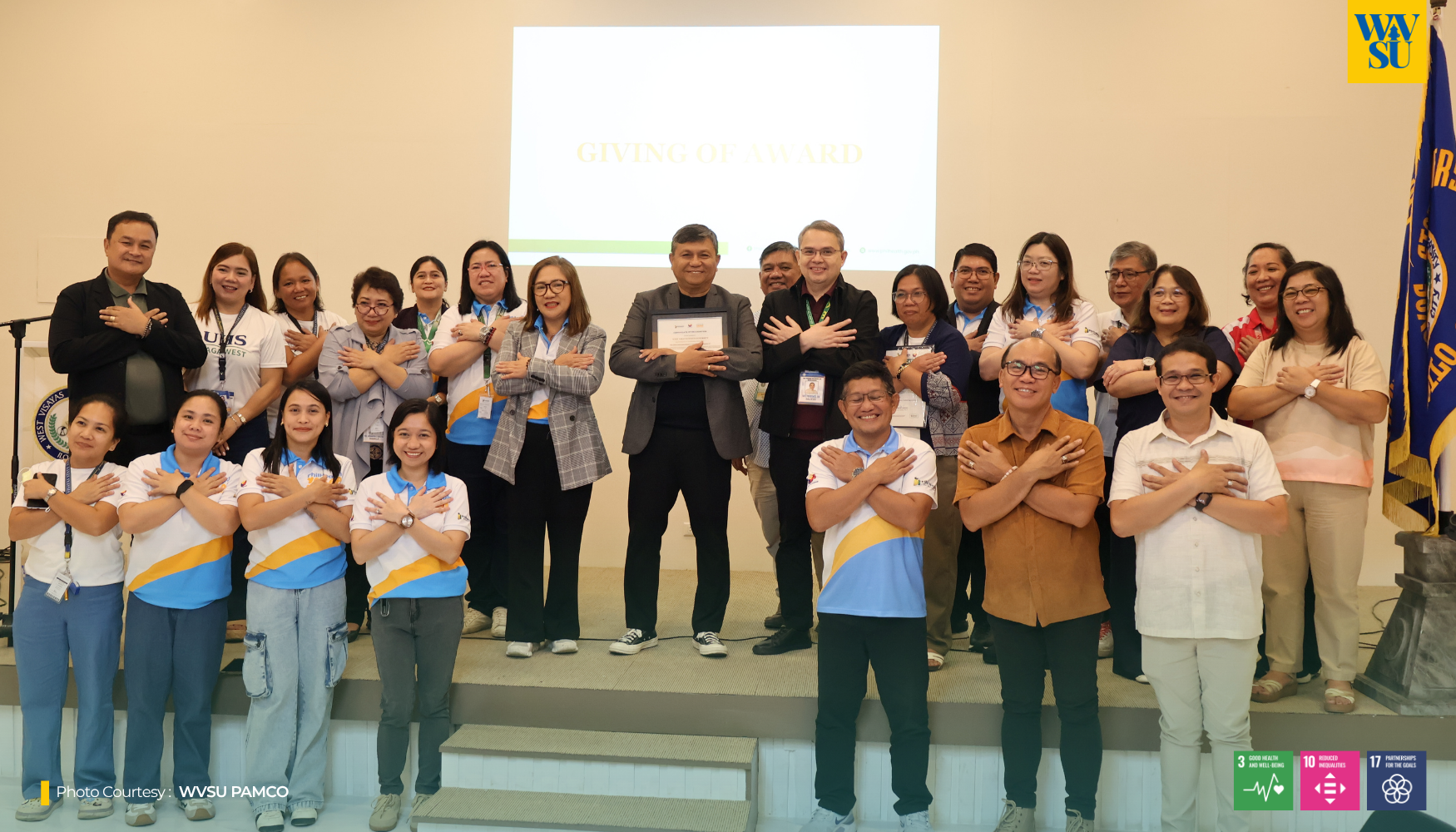
The West Visayas State University (WVSU) University Health Services (UHS) was officially recognized as the first university clinic in Region VI accredited as a PhilHealth Yaman ng Kalusugan (YAKAP) facility during the program held Sept. 4 at the University.
The milestone strengthens WVSU’s efforts to bring accessible and preventive healthcare closer to its students, faculty, staff, and other eligible members of the University community.
As a PhilHealth YAKAP facility, the UHS will provide primary healthcare services focused on prevention, early detection, and timely management of health conditions. The program is designed to help members maintain good health through regular consultations, early disease detection, laboratory services, medicines, and other preventive care, helping address health concerns before they progress into more serious conditions.
PhilHealth Regional Office VI Regional Vice President Marjorie A. Cabrieto delivered a congratulatory message during the ceremony, citing the partnership between PhilHealth and the University.
“Beyond excellence in academics and research, including producing topnotchers, WVSU gives paramount importance on the health and well-being of not just their employees but also of their students and their dependents,” Cabrieto said.
University President Dr. Joselito F. Villaruz formally accepted the recognition on behalf of WVSU, emphasizing that the significance of the milestone goes beyond being the first school-based health center in the region accredited as a PhilHealth YAKAP facility.
“Beyond being first, what matters most is what this partnership makes possible: bringing preventive healthcare closer to our people, expanding access to essential health services, and transforming our shared commitment to health and well-being into meaningful action that touches lives and strengthens communities,” Villaruz said.
He also underscored the responsibility that comes with the accreditation, particularly the need to continuously strengthen the capacity of the UHS to provide responsive and people-centered care.
Dr. Ronalyn P. Gallinero, University Physician, together with members of the UHS team, accepted the recognition on behalf of the University Health Services. Vice President for Medical and Allied Sciences Dr. Victorino A. Salcedo III, Vice President for Administration and Finance Peter Ernie D. Paris, Vice President for Academic Affairs Ma. Asuncion Christine V. Dequilla, Faculty Regent Shim Lester G. de Pio, and Alumni Regent Bonifacio P. Gaverza were also present during the launch.
As part of the launch, PhilHealth personnel set up registration booths at the UHS to assist students and other eligible individuals with PhilHealth membership, YAKAP registration, and First Patient Encounter.
Students who are not yet PhilHealth members were provided free assistance with membership registration, while eligible students were given the opportunity to voluntarily register for the YAKAP program.
For WVSU, the accreditation represents another step toward strengthening a culture of health across the University.
“At West Visayas State University, transforming generations means investing not only in knowledge and skills, but also in the health and well-being of the people who carry our mission forward,” Villaruz said.
The University looks forward to sustaining its partnership with PhilHealth in advancing preventive healthcare and ensuring that quality health services remain within reach of the people it serves.
Category: Setting and Infrastructure
-
WVSU University Health Services becomes first university clinic in Region VI accredited as PhilHealth YAKAP facility
-
From Forest Floor to Canopy: WVSU MAEd Biological Science Students Bridging Ecological Theory and Practice at Mari-it Wildlife and Conservation Park
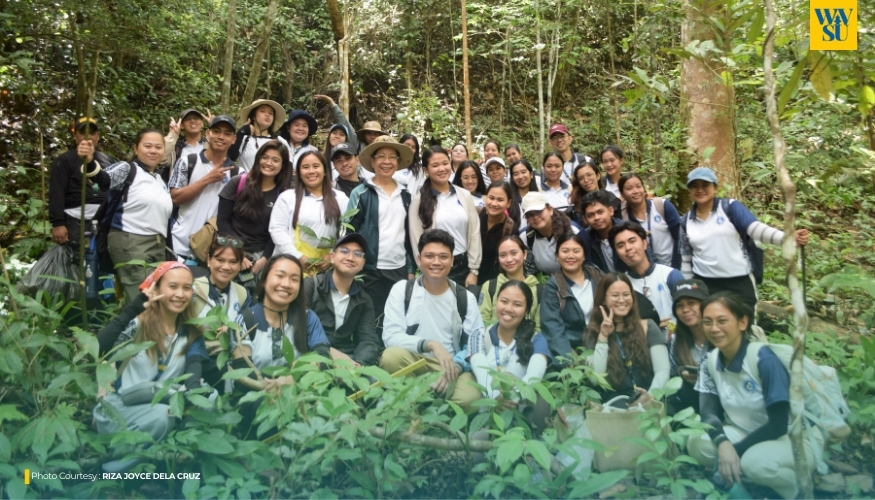
Graduate students from the Master of Arts in Education (MAEd) majoring in Biological Sciences at West Visayas State University (WVSU) Main Campus conducted a field-based ecological assessment at Mari-it Wildlife and Conservation Park on Mar. 14, 2026. The activity was part of the course BSC 503: Advanced Ecology and was supervised by Dr. Josette T. Biyo.
The field study covered population sampling, vegetation analysis, and ecosystem dynamics, giving students practical experience in ecological research methods within a protected forest ecosystem. About 40 graduate students took part in the activity.
Dr. Biyo emphasized the value of place-based and inquiry-driven learning in science education, highlighting that hands-on field experiences help link abstract ecological ideas with real-world environmental issues. She observed that experiential learning improves teachers’ practical scientific literacy and promotes active involvement in citizen science and environmental stewardship.
“What you have learned in the classroom and what you have concretized in activities can truly be taught to your learners as well. That’s very important for conservation and appreciation. This will help teach kids and the community how to care for our forests, which serve as habitats for wildlife,” she said.
The field activity was carried out in partnership with the WVSU College of Agriculture and Forestry (CAF), led by Dr. Jose Ariel A. Tutor. Foresters and volunteers from CAF accompanied the graduate students during the fieldwork, offering technical guidance in species identification, vegetation analysis, and ecological data collection.
During the assessment, students used systematic sampling techniques, specifically transect and quadrat methods, to conduct inventories of mature trees, saplings, shrubs, and seedlings, as well as to identify tree species composition and associated organisms. These methods enabled participants to examine species distribution, characterize vegetation structure, and explore ecological interactions within the forest ecosystem.
Forester Rod Reynan Laspiñas emphasized the importance of practical field experience in understanding ecological concepts.
“It’s very important for you to visit the site because it helps you better understand the concepts of vegetation analysis and forest ecology overall. This is what we call action-oriented learning or learning by doing. The experience is very different when you are right there on the ground,” he explained.
The Mari-it Wildlife and Conservation Park, situated within the 3,000-hectare WVSU Lambunao Campus, serves as a sanctuary for several endemic wildlife species. These include the Visayan warty pig (Sus cebifrons), the Visayan tarictic hornbill (Penelopides panini), and the Visayan leopard cat (Prionailurus javanensis), locally known as Maral, which also symbolizes the university.
As a recognized center for wildlife conservation and biodiversity protection in Western Visayas, the park functions as an ideal living laboratory for ecological research and environmental education. The field activities thus support the broader institutional efforts of WVSU to equip future educators with advanced ecological research skills while fostering a deeper appreciation for biodiversity conservation and sustainable ecosystem management. -
A Space for the Sea: WVSU opens Sea Turtle Nook to inspire environmental stewardship
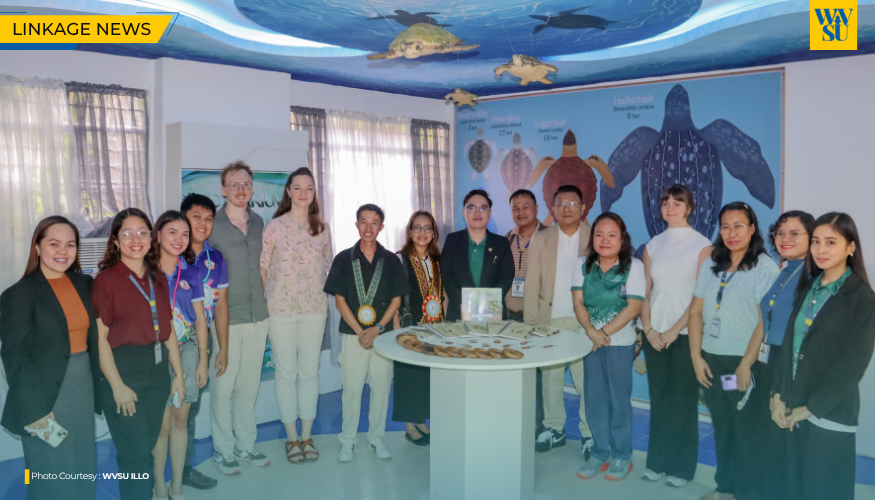
A small space now carries a big mission at West Visayas State University (WVSU) as the Sea Turtle Nook was officially inaugurated on March 6, 2026, at the University Learning Resource Center—serving as a new symbol of hope for marine conservation and environmental awareness.
President Dr. Joselito F. Villaruz described the Sea Turtle Nook as more than an installation. For him, it is a learning call—an invitation for students, educators, and visitors to recognize their shared responsibility in protecting marine ecosystems.
The initiative builds upon the Sanctuarium Maris: Sea Turtle Nest Protection Project, launched in 2025 by the WVSU DagYoung Student Ambassadors together with the Positive Youth Development Network (PYDN), the Department of Environment and Natural Resources (DENR), and the Young Journalists’ Society (YJS), with support from the Embassy of France to the Philippines and Micronesia. Since its launch, the project has worked closely with the coastal community of Brgy. Atabayan, Tigbauan, providing training on sea turtle biology, conservation practices, rescue protocols, and nest protection efforts.
Highlighting collaboration at the heart of the initiative, International and Local Linkages Office Director Ms. Edel Carmela S. Subong-Csoka shared that the Sea Turtle Nook represents the collective efforts of youth leaders, local communities, academic institutions, government agencies, and international partners united by a common goal—to safeguard marine life for future generations.
Community representative Mr. Peter Paul Cadano, SK Chairman of Brgy. Atabayan expressed gratitude for the partnership, describing the nook as a reminder that environmental protection begins with awareness and shared responsibility. Representing DENR Region VI, Ms. Jessie L. Reyes affirmed continued collaboration with WVSU, noting that marine conservation efforts in Western Visayas are entering a stronger and more hopeful chapter.
Special Projects Coordinator Johnric G. Vargas emphasized that the Sea Turtle Nook is not a temporary exhibit but a lasting legacy—one that transforms education into action and inspires future generations of Taga-West to care for the environment beyond the classroom.
Through the Sea Turtle Nook, WVSU reinforces a simple yet powerful message: even small spaces can create waves of change for the planet.
By Gladwyn B. Gustilo/ILLO