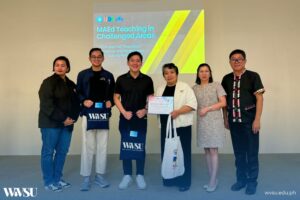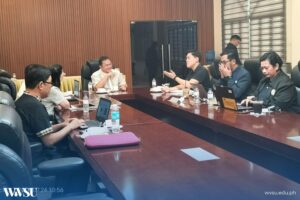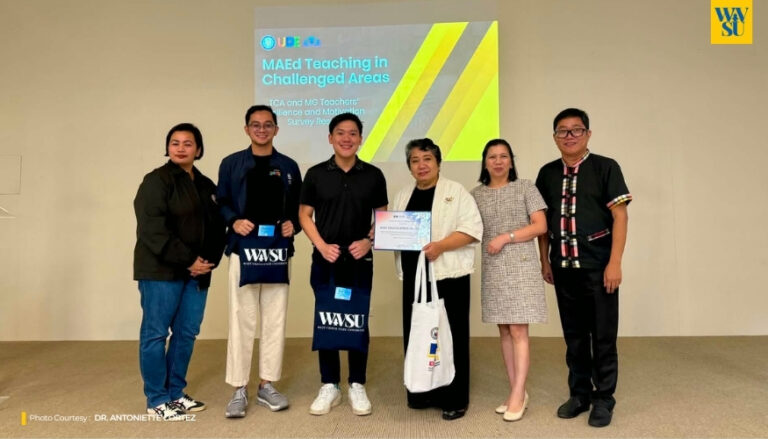
West Visayas State University (WVSU) welcomed officials from the Second Congressional Commission on Education (EDCOM 2) on July 24 for a meeting highlighting the University’s pioneering Master of Arts in Education major in Teaching in Challenged Areas (MAEd-TCA), a graduate program designed to support teachers serving in some of the country’s most underserved learning environments.
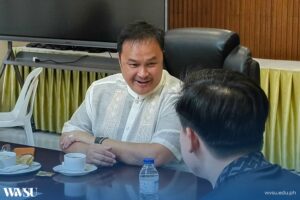
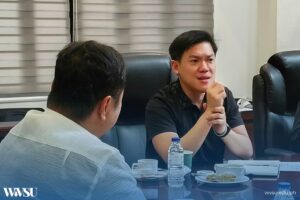
Held at the WVSU Board Room, the meeting provided an opportunity for EDCOM 2 Executive Director Dr. Karol Mark Yee and his team to learn more about the University’s innovative graduate program, which equips educators working in Alternative Learning System (ALS), multigrade classrooms, Indigenous Peoples Education (IPED), Last Mile Schools, and geographically isolated and disadvantaged areas (GIDA) with context-responsive knowledge and teaching strategies.
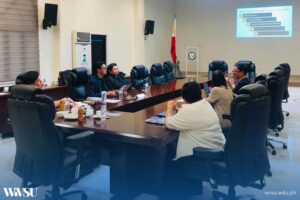
University officials presented the program’s objectives, curriculum, and ongoing implementation, emphasizing its commitment to making quality graduate education more accessible to teachers facing unique challenges in the field. Discussions also explored how the program responds to persistent issues of educational equity by preparing educators to address the realities of marginalized learners and communities.
The program highlights the need to strengthen support for teachers serving in challenged areas while ensuring that learners receive quality and equitable education. Attending the meeting from EDCOM 2 were Executive Director Dr. Karol Mark Yee and Head Executive Assistant Dominic Rolloda. Representing WVSU were Vice President for Academic Affairs Dr. Ma. Asuncion Christine V. Dequilla, Vice President for Administration and Finance Dr. Peter Ernie D. Paris, Distance Education Director Dr. Daisy A. Rosano, Center for Teaching Excellence Director and MAEd-TCA Program Adviser Dr. Antoniette Cortez, and MAEd-TCA Student Representative Darwin Tadifa.
The visit reflects WVSU’s continuing efforts to develop innovative and inclusive academic programs that respond to national education priorities. Through initiatives such as the MAEd-TCA program, the University contributes to strengthening teacher development, expanding access to quality education for underserved communities.