WVSU

Tag: 13

TAKE URGENT ACTION TO COMBAT CLIMATE CHANGE AND ITS IMPACTS.

Climate change is a real and undeniable threat to our entire civilization.The effects are already visible and will be catastrophic unless we act now. Through education, innovation and adherence to our climate commitments, we can make the necessary changes to protect the planet. These changes also provide huge opportunities to modernize our infrastructure which will create new jobs and promote greater prosperity across the globe.

  • WVSU prepares university-wide El Niño adaptation plan ahead of 2026-2027 dry season

    WVSU prepares university-wide El Niño adaptation plan ahead of 2026-2027 dry season

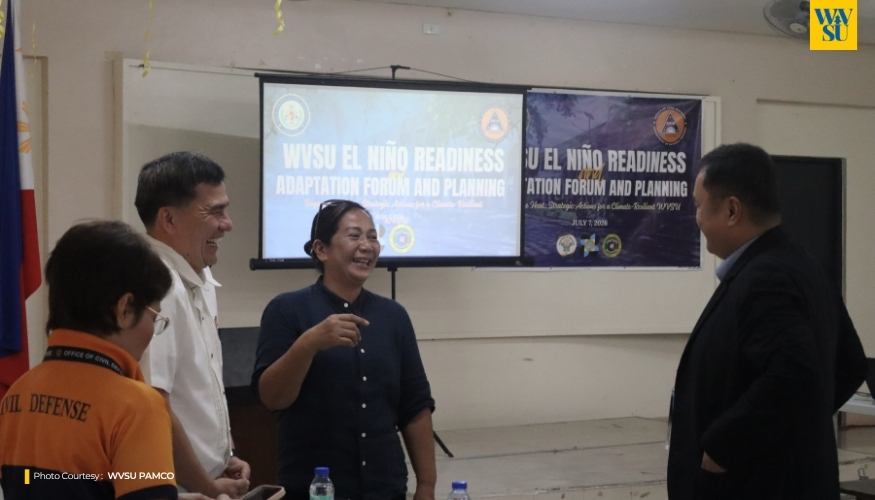
    With forecasts indicating a high probability of El Niño developing in the coming months, West Visayas State University (WVSU) has begun crafting a university-wide adaptation plan to help protect students, personnel, campus operations, and critical resources from the anticipated effects of prolonged dry conditions.

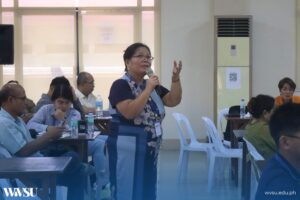
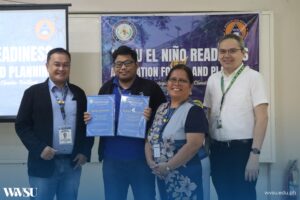
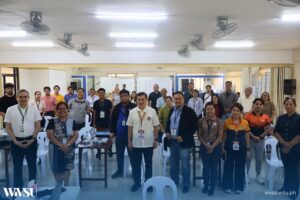
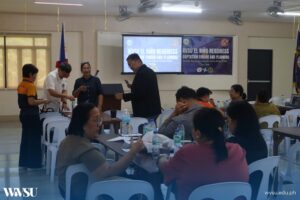
    The University conducted its El Niño Readiness and Adaptation Forum and Planning on July 7 at the Research and Extension Building Conference Room, bringing together disaster risk reduction and management officers and planning officers from the Main Campus, satellite campuses, and the WVSU Medical Center.

    Spearheaded by the Environmental Resource Management Office (ERMO) under the leadership of Director Dr. Maria Lea Escantilla-Lebuna, the activity aimed to prepare a coordinated, risk-informed response to the anticipated impacts of El Niño across the University.

    To help guide institutional planning, participants first received updates from Jan Hermo Baron, weather specialist of Philippine Atmospheric, Geophysical and Astronomical Services Administration (PAGASA) Visayas Regional Services, who presented the latest climate outlook for July to December 2026. Raul E. Fernandez, regional director of the Office of Civil Defense (OCD) Region VI, together with Janice Ragus, chief of the OCD Rehabilitation and Recovery Section, also discussed strategies for preparing WVSU through a risk-informed, whole-of-university approach.

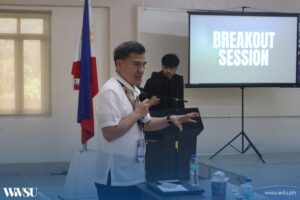
    Following the forum, representatives from each campus and unit identified vulnerabilities specific to their respective areas and developed initial adaptation strategies. The workshop focused on four key risk sectors: water security, health and well-being, food security, and institutional operations.

    Among the concerns discussed were water supply and storage, hospital and laboratory water requirements, heat stress among students and personnel, campus food resources, power and generator readiness, infrastructure maintenance, and possible adjustments to academic and work schedules.

    Each campus and unit developed proposed action plans identifying priority interventions, implementation timelines, and responsible offices. These recommendations will be consolidated and refined into a comprehensive University El Niño adaptation plan for implementation.

    The forum forms part of WVSU’s continuing commitment to strengthening disaster preparedness and institutional resilience through proactive planning, scientific information, and collaborative action across the University community.
  • WVSU broadens its international reach in the Times Higher Education Global Sustainable Development Congress 2026

    WVSU broadens its international reach in the Times Higher Education Global Sustainable Development Congress 2026

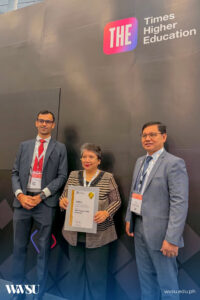
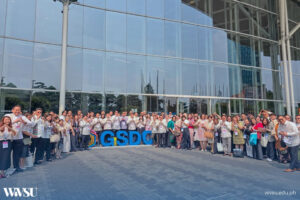
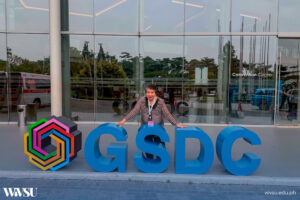
    Strengthening its commitment to internationalization and sustainable development, West Visayas State University (WVSU) joined higher education leaders, policymakers, and development partners from around the world at the Times Higher Education (THE) Global Sustainable Development Congress 2026 held in Jakarta, Indonesia, from June 22 to 25, 2026.

    Dr. Ma. Asuncion Christine V. Dequilla, Vice President for Academic Affairs, represented the university in the international gathering, engaging in networking opportunities, knowledge-sharing sessions, and discussions on innovative approaches to advancing the United Nations Sustainable Development Goals (SDGs).

    “Attending the GSDC provided me a deeper understanding on how WVSU can harmonize what we have been doing to contribute to the SDGs.

    We need to strengthen and pursue more impactful services to our community as we empower lifelong learners as agents of value — our way of transforming society.

    I believe, WVSU has taken the right direction as we work to achieve our vision of becoming a global research university that shapes generations. Let this be our ‘why’ and as a result we are recognized.

    I thank and congratulate the taga-West for the dedication in their work and duties,” she said.

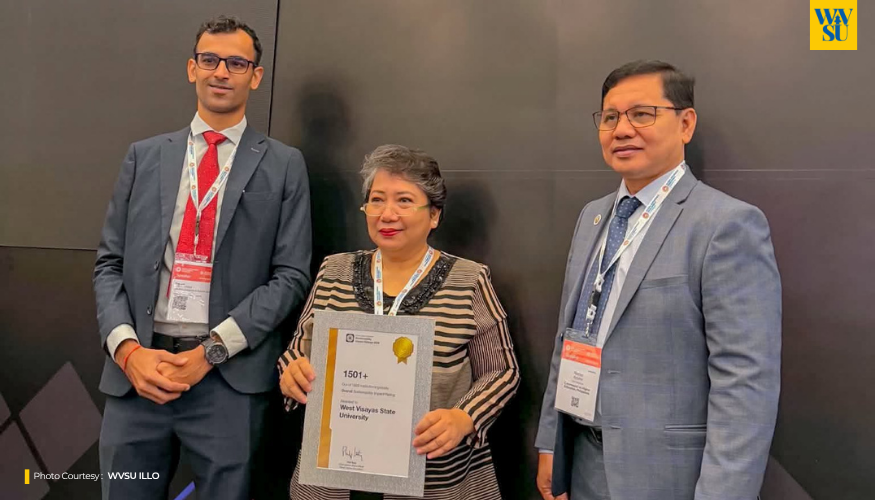
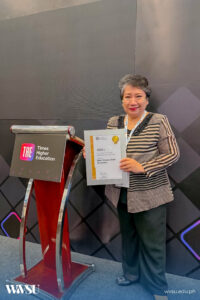
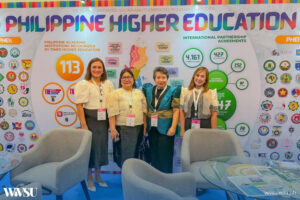
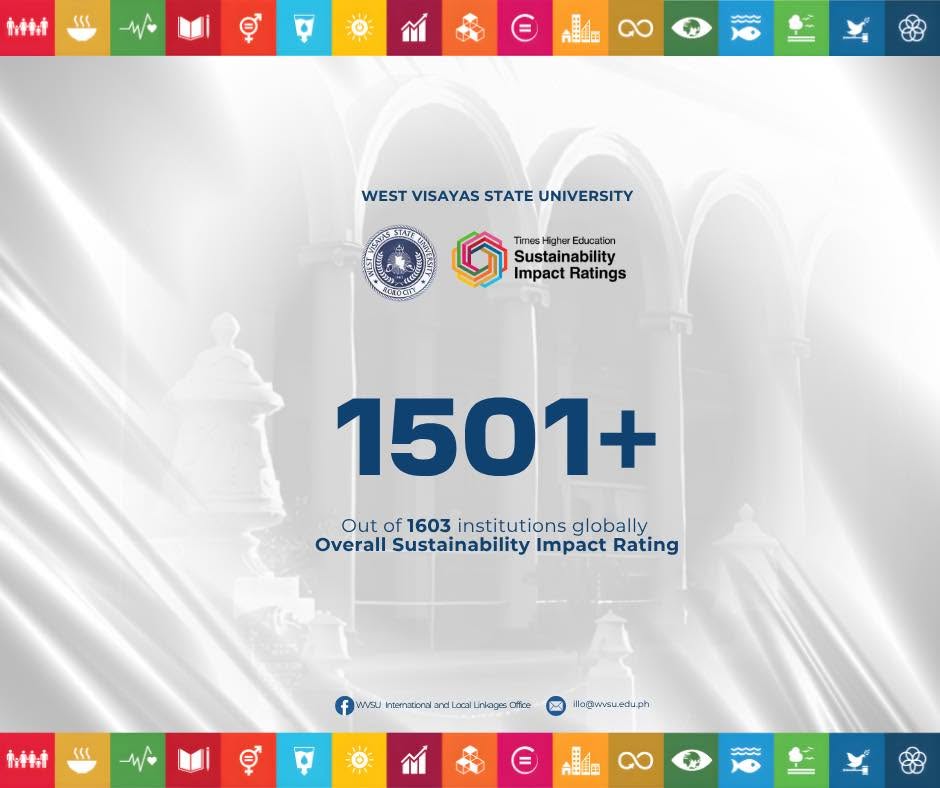
    The University’s participation comes as WVSU continues to gain international recognition for its sustainability initiatives. In the 2026 Sustainability Impact Ratings, WVSU was recognized among 1,501+ universities worldwide.

  • WVSU advances sustainability efforts in the 2026 impact rankings

    WVSU advances sustainability efforts in the 2026 impact rankings

    Strengthening its global presence, West Visayas State University (WVSU) earned recognition in the 2026 Sustainability Impact Ratings, ranking among 1,501+ universities worldwide, highlighting its internationalization efforts and commitment to the UN Sustainable Development Goals (SDGs).

    The 2026 rankings evaluated 1,646 universities across 116 countries and territories, recognizing institutions that actively advance sustainable development through innovation, partnerships, and academic excellence.

    As WVSU continues to expand its global linkages and sustainability initiatives, it reaffirms its mission to produce globally competitive and socially responsible graduates who contribute to a more sustainable future.

  • WVSU rises to rank 137 in WURI 2026, breaks into global top 500 innovative

    WVSU rises to rank 137 in WURI 2026, breaks into global top 500 innovative

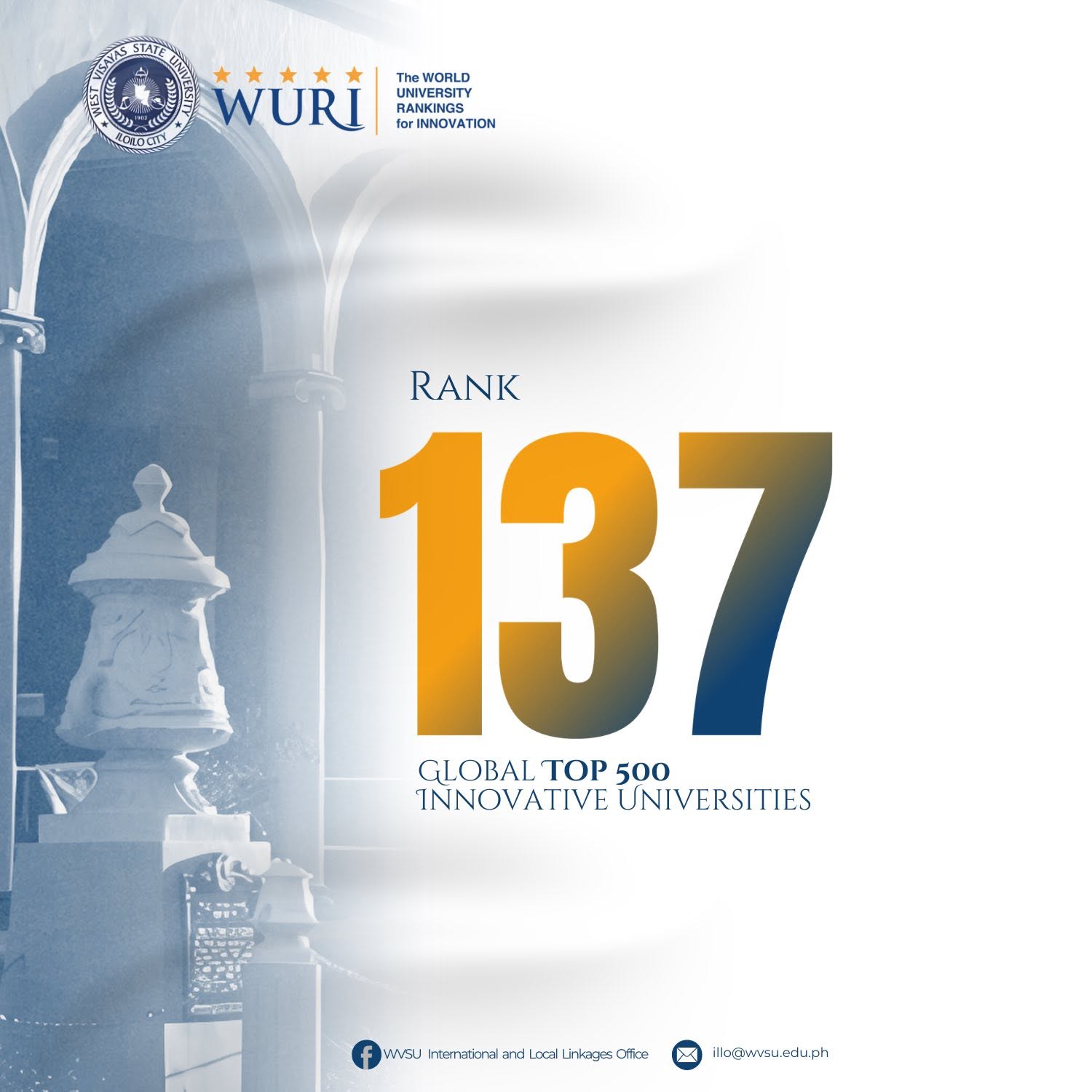
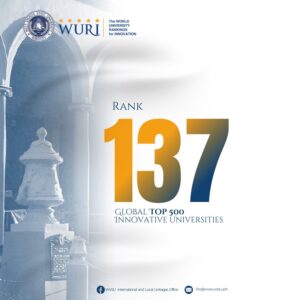
    West Visayas State University (WVSU) has secured Rank 137 in the World University Rankings for Innovation (WURI) 2026, placing it among the Global Top 500 Innovative Universities.

    This marks a significant rise from its 187th position in 2025, highlighting the university’s continued commitment to innovation, quality assurance, enhanced student engagement, and strengthened international collaboration.

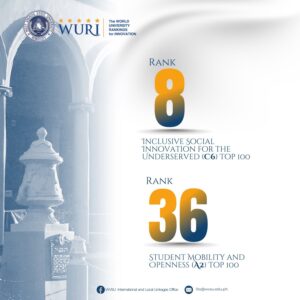
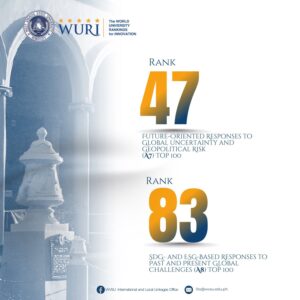
    In addition to its overall ranking, WVSU earned recognition in several specialized categories within the WURI Top 100:

    * Rank 8 – Inclusive Social Innovation for the Underserved (C6)

    * Rank 36 – Student Mobility and Openness (A2)

    * Rank 47 – Future-Oriented Responses to Global Uncertainty and Geopolitical Risk (A7)

    * Rank 83 – SDG- and ESG-Based Responses to Past and Present Global Challenges (A8)

    The World University Rankings for Innovation evaluates universities based on innovation, practical impact, and responsiveness to global and societal challenges, rather than traditional academic metrics.

    WVSU’s improved standing reflects its continued commitment to advancing education that is innovative, socially responsive, and aligned with global standards.

  • WVSU pinalalakas ang paggamit ng Filipino sa opisyal na korespondensiya sa panlalawigang seminar

    WVSU pinalalakas ang paggamit ng Filipino sa opisyal na korespondensiya sa panlalawigang seminar

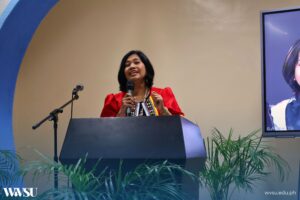
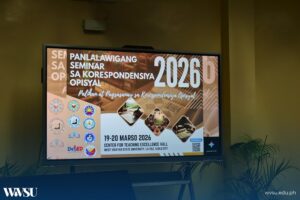
    Pinangunahan ng West Visayas State University (WVSU) Sentro ng Wika at Kultura, katuwang ang Sentro ng Wikang Filipino, ang Panlalawigang Seminar sa Korespondensiya Opisyal 2026 na isinasagawa ngayong Marso 19–20, 2026 sa WVSU Center for Teaching Excellence.

    Ang unang araw ng seminar ay dinaluhan ng mga kalahok mula sa iba’t ibang institusyon sa sektor ng edukasyon at serbisyong pampubliko, na naglalayong paigtingin ang paggamit ng Filipino sa opisyal na komunikasyon.

    Gamit ang temang “Palihan at Pagsasanaysay sa Korespondensiya Opisyal,” layunin ng seminar na palakasin ang paggamit ng Filipino sa akademya at sektor publiko, alinsunod sa Executive Order Blg. 335 na naghihikayat ng paggamit ng Filipino sa mga opisyal na korespondensiya at transaksiyon ng pamahalaan.

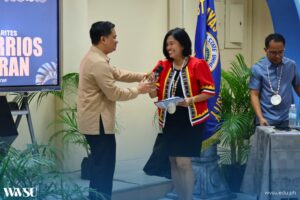
    Binuksan ang aktibidad sa pagkilala sa mga kalahok mula sa iba’t ibang institusyon at eksternal na kampus. Ipinakilala ni Dr. Salvador P. Bacio, direktor ng WVSU Sentro ng Wika at Kultura, ang mga kalahok at mga imbitadong panauhin mula sa Komisyon sa Wikang Filipino (KWF), at binigyang-diin ang kanilang ambag sa pagsusulong ng wikang Filipino.

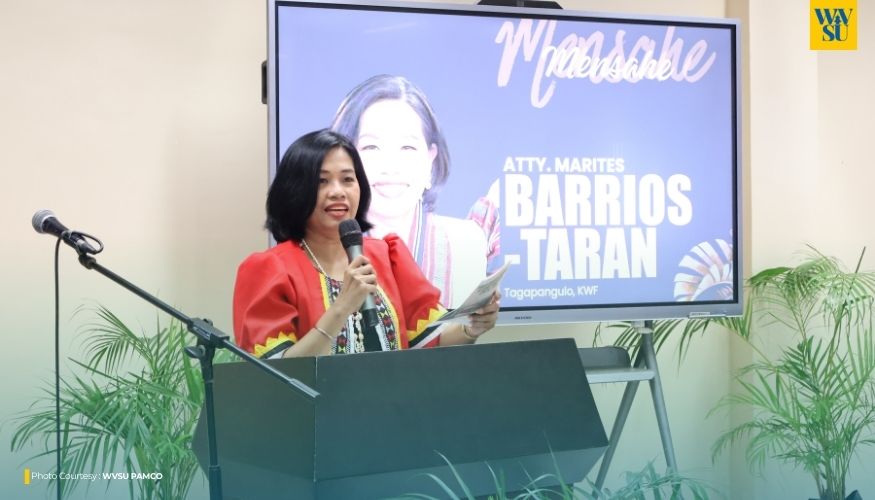
    Kabilang sa mga nagbahagi ng talakayan ang mga kinatawan mula sa Sentro ng Wika at Kultura na si Alain Ruzz D. Gimzo ng Komisyong Hiligaynon; at Dr. Jose Elvie G. Duclay, tagapamahala ng SWK-Visayas, at kinatawan ng Komisyon ng Wikang Filipino na sina Atty. Marites Barrios-Taran, tagapangulo; at Dr. Carmelita C. Abduhraman, full-time komisyoner. 

    Layunin ng seminar na pahusayin ang kasanayan ng mga kalahok sa pagsulat at presentasyon ng opisyal na korespondensiya sa Filipino upang maisulong ang mas epektibo at estandardisadong komunikasyon sa akademya at pamahalaan. Kasabay nito, binigyang-diin ang tungkulin ng KWF sa pagpapanatili at pagtataguyod ng wikang Filipino, pati na rin ng mga katutubong wika.

    Magpapatuloy ang aktibidad bukas para sa ikalawang araw ng mga sesyon at karagdagang talakayan mula sa iba pang tagapagsalita.

  • WVSU hosts Model United Nations Conference 2026

    WVSU hosts Model United Nations Conference 2026

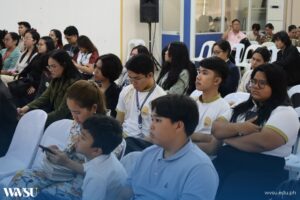
    Student delegates from across the country gather as West Visayas State University hosts the West Visayas Model United Nations Conference 2026 from March 19 to 21 at the Research and Extension Building’s Research Conference Room.

    Organized by the West Visayas Model United Nations, the three-day conference convenes participants to engage in diplomatic simulations, collaborative dialogue, and policy discussions aimed at addressing global issues.

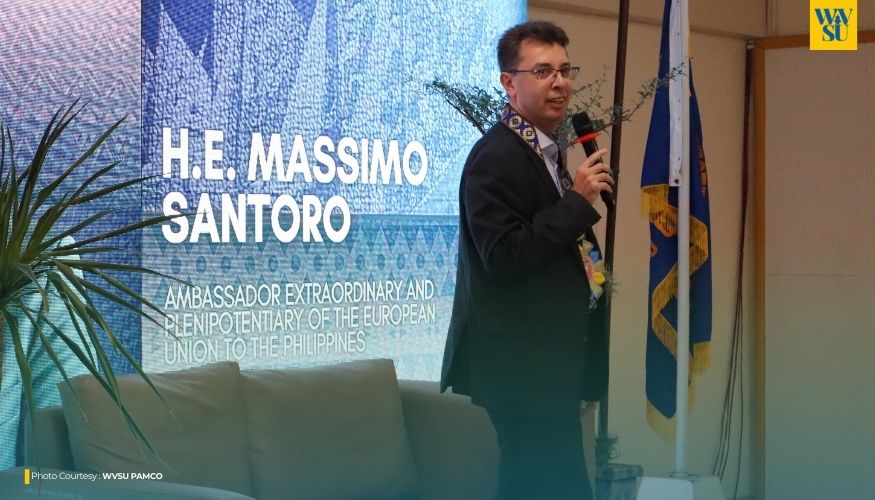
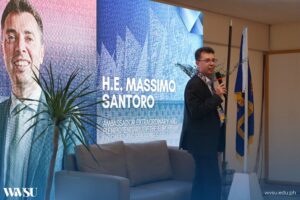
    His Excellency Mariomassimo Santoro, Ambassador of the European Union to the Philippines, delivers the keynote address during the opening plenary. Santoro brings extensive experience in diplomacy and international relations, having previously served as Head of Office of the Secretary General of the European External Action Service and Head of Division for Policy Coordination from 2021 to 2024, where he oversaw policy coordination, decision-making processes and cooperation with international partners.

    Vice President for Administration and Finance, Dr. Peter Ernie Paris, underscores the University’s role in advancing global engagement.

    “Our university stands as a proactive partner in advancing diplomacy, inclusivity, and meaningful engagement in international affairs. The Model United Nations organization of the West Visayas State University is committed to cultivating future leaders who will carry forward the values of peace, cooperation, and respect among nations,” Dr. Paris says.

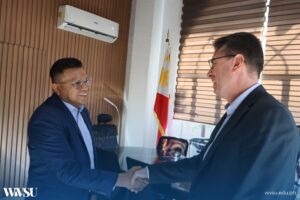
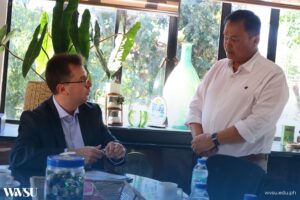
    Earlier in the day, University President Dr. Joselito F. Villaruz and Dr. Paris met with Santoro to discuss European and Filipino culture and food, academic exchanges, potential institutional partnerships, and scholarship opportunities, as well as ways to strengthen ties between the University and the European Union.

    The conference underscores its commitment to fostering meaningful participation and bridging differences among young leaders. It aims to equip delegates with the skills and perspectives needed to engage with global challenges with purpose and understanding.

    The initiative promotes diplomacy that extends beyond conference halls, encouraging participants to work collaboratively toward a more harmonious and interconnected world.

  • From Forest Floor to Canopy: WVSU MAEd Biological Science Students Bridging Ecological Theory and Practice at Mari-it Wildlife and Conservation Park

    From Forest Floor to Canopy: WVSU MAEd Biological Science Students Bridging Ecological Theory and Practice at Mari-it Wildlife and Conservation Park

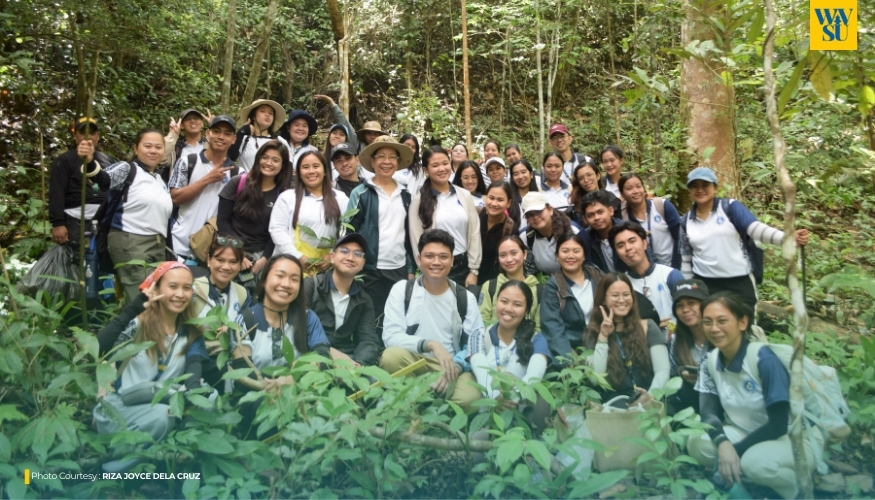
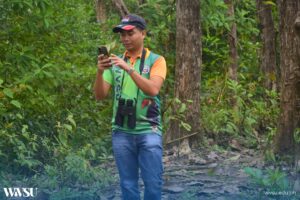
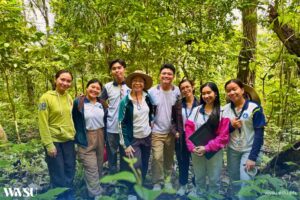
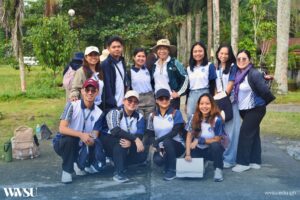
    Graduate students from the Master of Arts in Education (MAEd) majoring in Biological Sciences at West Visayas State University (WVSU) Main Campus conducted a field-based ecological assessment at Mari-it Wildlife and Conservation Park on Mar. 14, 2026. The activity was part of the course BSC 503: Advanced Ecology and was supervised by Dr. Josette T. Biyo.

    The field study covered population sampling, vegetation analysis, and ecosystem dynamics, giving students practical experience in ecological research methods within a protected forest ecosystem. About 40 graduate students took part in the activity.
    Dr. Biyo emphasized the value of place-based and inquiry-driven learning in science education, highlighting that hands-on field experiences help link abstract ecological ideas with real-world environmental issues. She observed that experiential learning improves teachers’ practical scientific literacy and promotes active involvement in citizen science and environmental stewardship.

    “What you have learned in the classroom and what you have concretized in activities can truly be taught to your learners as well. That’s very important for conservation and appreciation. This will help teach kids and the community how to care for our forests, which serve as habitats for wildlife,” she said.

    The field activity was carried out in partnership with the WVSU College of Agriculture and Forestry (CAF), led by Dr. Jose Ariel A. Tutor. Foresters and volunteers from CAF accompanied the graduate students during the fieldwork, offering technical guidance in species identification, vegetation analysis, and ecological data collection.

    During the assessment, students used systematic sampling techniques, specifically transect and quadrat methods, to conduct inventories of mature trees, saplings, shrubs, and seedlings, as well as to identify tree species composition and associated organisms. These methods enabled participants to examine species distribution, characterize vegetation structure, and explore ecological interactions within the forest ecosystem.

    Forester Rod Reynan Laspiñas emphasized the importance of practical field experience in understanding ecological concepts.

    “It’s very important for you to visit the site because it helps you better understand the concepts of vegetation analysis and forest ecology overall. This is what we call action-oriented learning or learning by doing. The experience is very different when you are right there on the ground,” he explained.

    The Mari-it Wildlife and Conservation Park, situated within the 3,000-hectare WVSU Lambunao Campus, serves as a sanctuary for several endemic wildlife species. These include the Visayan warty pig (Sus cebifrons), the Visayan tarictic hornbill (Penelopides panini), and the Visayan leopard cat (Prionailurus javanensis), locally known as Maral, which also symbolizes the university.
    As a recognized center for wildlife conservation and biodiversity protection in Western Visayas, the park functions as an ideal living laboratory for ecological research and environmental education. The field activities thus support the broader institutional efforts of WVSU to equip future educators with advanced ecological research skills while fostering a deeper appreciation for biodiversity conservation and sustainable ecosystem management.

  • WVSU visits Iloilo City Government to strengthen sustainable finance collaboration under Erasmus+ GREEN FINANCE

    WVSU visits Iloilo City Government to strengthen sustainable finance collaboration under Erasmus+ GREEN FINANCE

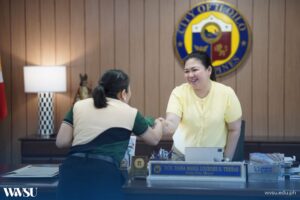
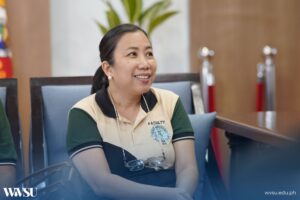
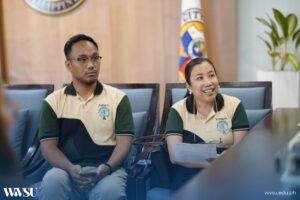
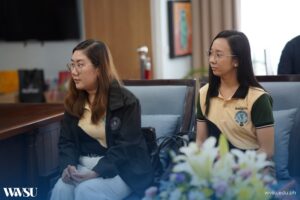
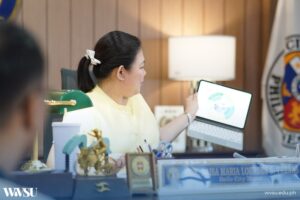
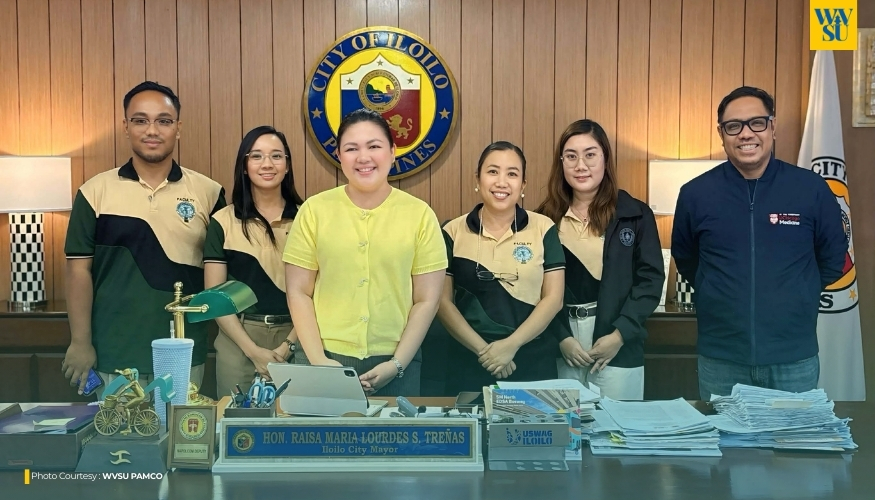
    In line with its commitment to sustainability, innovation, and international collaboration, West Visayas State University (WVSU) visited the Iloilo City Government as part of its engagement under the Erasmus+ Capacity Building in Higher Education (CBHE) Project, GREEN FINANCE: Advancing Higher Education for Sustainable Growth in Southeast Asia. The initiative seeks to enhance education, research, and policy engagement in sustainable finance and promote climate-responsive financial practices in the Philippines.

    The visit, led by Dr. Maria Corazon M. Samorin, Associate Professor V and Project Manager of the Erasmus+ GREEN FINANCE initiative, aimed to introduce the project to the Local Economic Development and Investment Promotions (LEDIP) Office and seek their endorsement to participate in the Stakeholders Survey. This collaboration ensures that local government policies, priorities, and opportunities are integrated into the design of modular and online micro-credential courses that WVSU will develop for sustainable finance education.
    Through this engagement, WVSU emphasizes the importance of aligning academic programs with city development goals, empowering local stakeholders and Ilonggos to adopt green and sustainable mindsets in finance. The initiative demonstrates a shared commitment to responsible investment, inclusive growth, and environmentally sound practices, reinforcing WVSU’s role as a leader in sustainability-driven higher education.

    Funded by the European Union, the Erasmus+ GREEN FINANCE project positions WVSU to bridge international expertise with local needs, ensuring that Iloilo City benefits from innovative and outcomes-based green finance initiatives.

    Photos by Iloilo City Government

  • A Space for the Sea: WVSU opens Sea Turtle Nook to inspire environmental stewardship

    A Space for the Sea: WVSU opens Sea Turtle Nook to inspire environmental stewardship

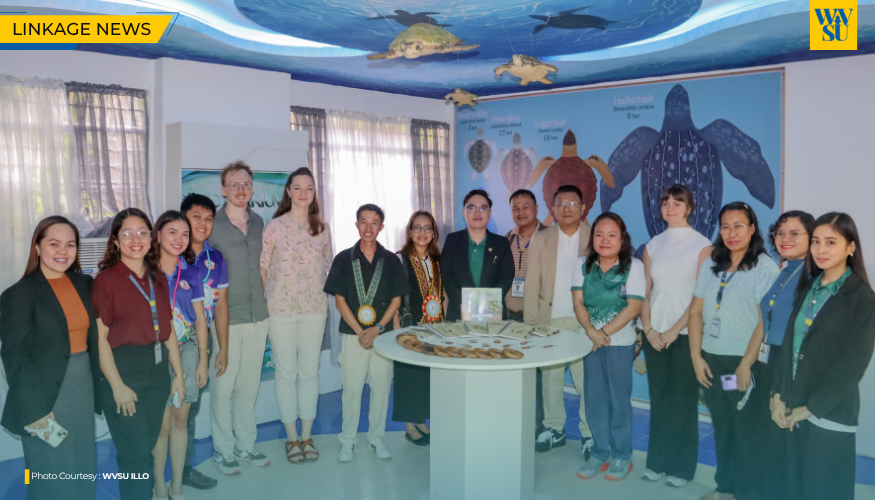
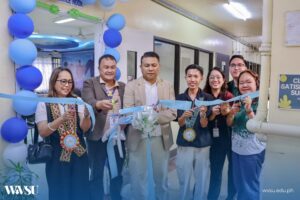
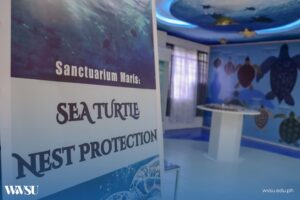
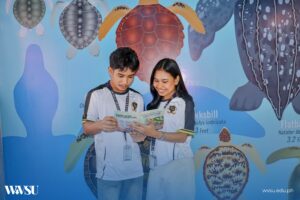
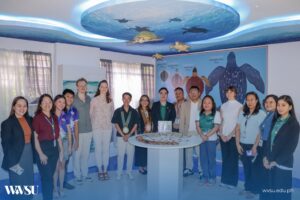
    A small space now carries a big mission at West Visayas State University (WVSU) as the Sea Turtle Nook was officially inaugurated on March 6, 2026, at the University Learning Resource Center—serving as a new symbol of hope for marine conservation and environmental awareness.

    President Dr. Joselito F. Villaruz described the Sea Turtle Nook as more than an installation. For him, it is a learning call—an invitation for students, educators, and visitors to recognize their shared responsibility in protecting marine ecosystems.

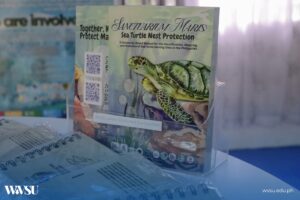
    The initiative builds upon the Sanctuarium Maris: Sea Turtle Nest Protection Project, launched in 2025 by the WVSU DagYoung Student Ambassadors together with the Positive Youth Development Network (PYDN), the Department of Environment and Natural Resources (DENR), and the Young Journalists’ Society (YJS), with support from the Embassy of France to the Philippines and Micronesia. Since its launch, the project has worked closely with the coastal community of Brgy. Atabayan, Tigbauan, providing training on sea turtle biology, conservation practices, rescue protocols, and nest protection efforts.

    Highlighting collaboration at the heart of the initiative, International and Local Linkages Office Director Ms. Edel Carmela S. Subong-Csoka shared that the Sea Turtle Nook represents the collective efforts of youth leaders, local communities, academic institutions, government agencies, and international partners united by a common goal—to safeguard marine life for future generations.

    Community representative Mr. Peter Paul Cadano, SK Chairman of Brgy. Atabayan expressed gratitude for the partnership, describing the nook as a reminder that environmental protection begins with awareness and shared responsibility. Representing DENR Region VI, Ms. Jessie L. Reyes affirmed continued collaboration with WVSU, noting that marine conservation efforts in Western Visayas are entering a stronger and more hopeful chapter.

    Special Projects Coordinator Johnric G. Vargas emphasized that the Sea Turtle Nook is not a temporary exhibit but a lasting legacy—one that transforms education into action and inspires future generations of Taga-West to care for the environment beyond the classroom.

    Through the Sea Turtle Nook, WVSU reinforces a simple yet powerful message: even small spaces can create waves of change for the planet.

    By Gladwyn B. Gustilo/ILLO

  • Bridging worlds workshop boosts WVSU global readiness, internationalization

    Bridging worlds workshop boosts WVSU global readiness, internationalization

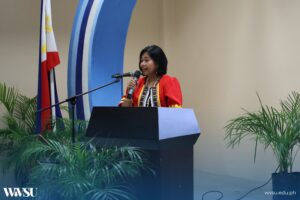
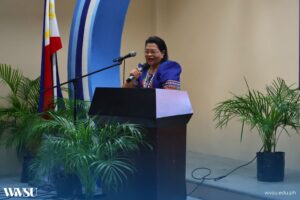
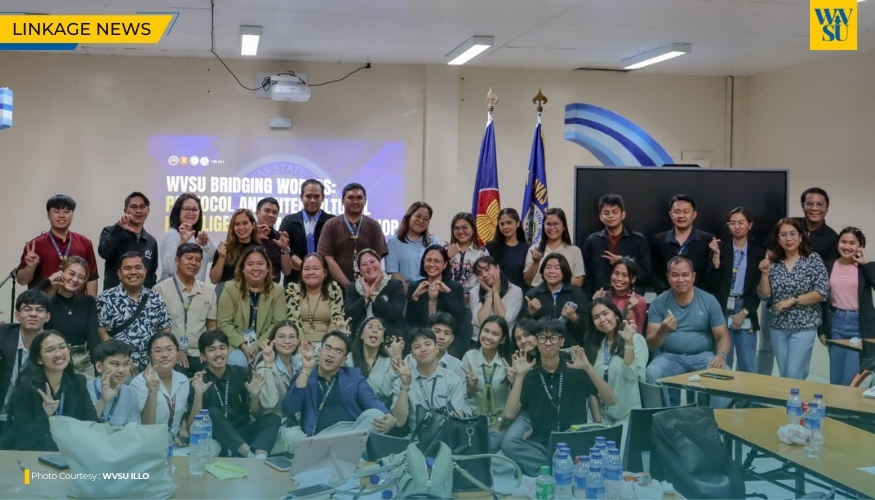
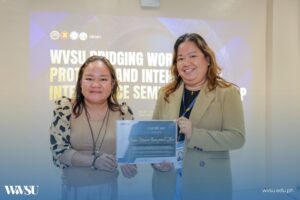
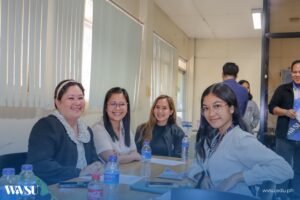
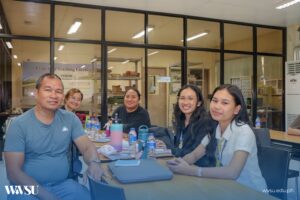
    Strengthening institutional internationalization efforts, the seminar-workshop “WVSU Bridging Worlds: Protocol and Intercultural Intelligence” was held on February 5 at the Center for Teaching Excellence (CTE) hall through the International and Local Linkages Office, in partnership with the Human Resource Management Office.

    The first day opened with a lecture by Dr. Louis Placido F. Lachica, WVSU Focal Person to the United Nations Sustainable Development Solutions Network (UN SDSN), highlighting the importance of SDG-aligned communication and the shared responsibility of the WVSU community in advancing the 17 Sustainable Development Goals.

    Setting the university’s global direction, Ms. Edel Carmela Subong Csoka, Director of the International and Local Linkages Office, discussed WVSU’s internationalization initiatives. This was followed by Ms. Danielle Galecio, Executive Assistant III from the Office of the President, who tackled diplomatic protocol, events and conference management, and the responsibilities of protocol officers, underscoring professionalism and cultural sensitivity in international engagements.

    Representing the Commission on Higher Education, Dr. Danebeth Narzoles, CHED Regional Office VI Internationalization Focal Person, presented CHED’s 7-Point Agenda, consisting of four core thrusts and three enablers that address key priorities in higher education, including lifelong learning, human capital development, SDG-based research and innovation, inclusive internationalization, data-driven governance, strengthened institutional systems, and effective public service.

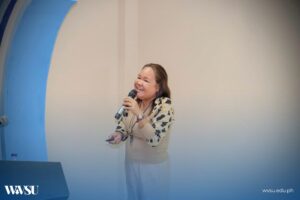
    Sessions on Intercultural Intelligence were led by Ms. Edel Carmela Subong-Csoka, followed by a workshop facilitated by Ms. Alisa Mei Locsin.

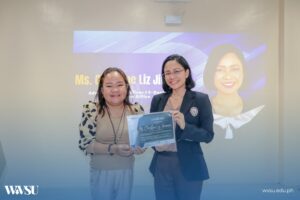
    The first day concluded with a discussion on “The Value of Rankings” by Ms. Christine Liz Jimenea, Administrative Officer IV of the Quality Assurance Office.

    By Gladwyn B. Gustilo/ILLO