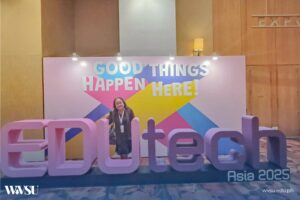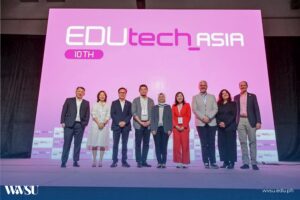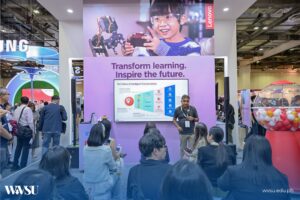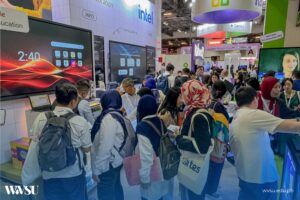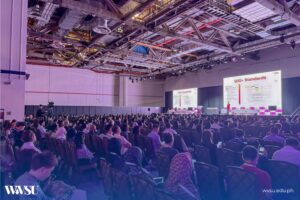
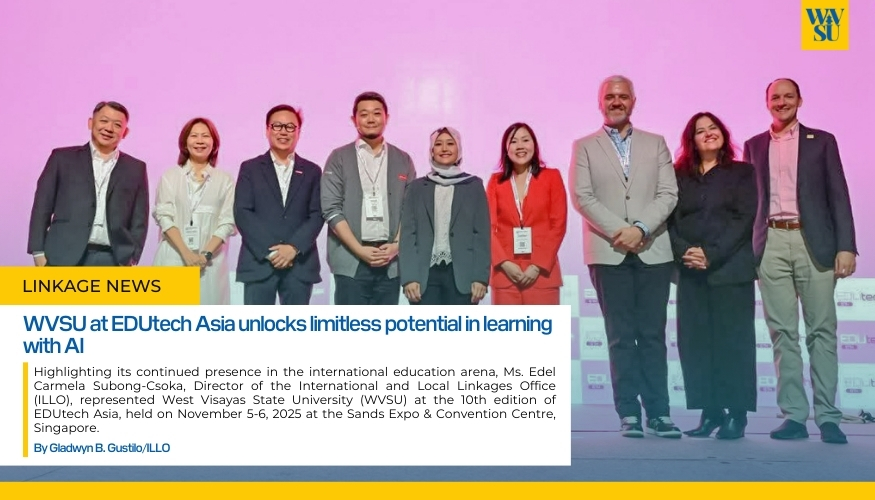

Highlighting its continued presence in the international education arena, Ms. Edel Carmela Subong-Csoka, Director of the International and Local Linkages Office (ILLO), represented West Visayas State University (WVSU) at the 10th edition of EDUtech Asia, held on November 5-6, 2025 at the Sands Expo & Convention Centre, Singapore.
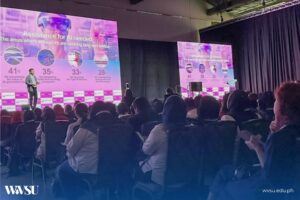
Carrying the theme “Positive Disruption: Unlocking Limitless Potential in Education with AI and Technology,” this year’s EDUtech Asia gathered more than 10,000 education leaders, policymakers, researchers, and technology innovators from across Asia.
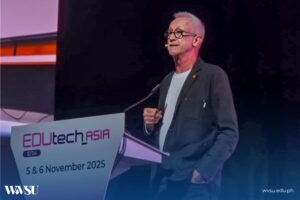
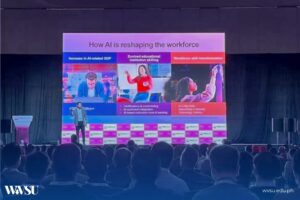
The keynote sessions featured globally recognized thought leaders in education reform and digital transformation. Professor Pasi Sahlberg of the University of Melbourne emphasized that many schools today are “tech-rich but transformation-poor,” urging education institutions to adopt technology with clear purpose and pedagogical intent.
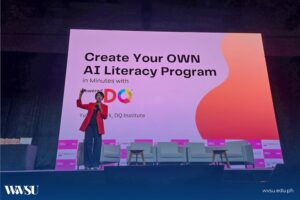
Dr. Yuhyun Park, creator of the Digital Intelligence Framework, discussed building AI literacy as an essential skill for learners in an increasingly data-driven world. Futurist Graham Brown-Martin explored how AI, immersive tools, and human-centered learning will converge to shape the future of global education ecosystems.
One of the most anticipated segments of the event was the live debate between Professor Sahlberg and Associate Professor Dr. Ng Pak Tee of Singapore’s National Institute of Education, which examined whether AI could ever replicate the irreplaceable human element of teaching, or whether the future lies in a collaborative partnership between human and machine intelligence.
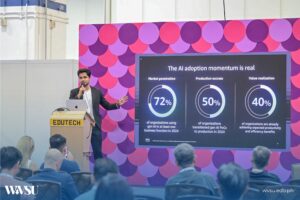
Throughout the two-day event, Ms. Edel participated in roundtable discussions, networking sessions, and collaborative learning exchanges with delegates from universities and schools across Asia. Highlights included EDUtech Asia’s engaging “Show & Tell” sessions, where educators shared practical insights with their peers, and the highly anticipated Planet Protectors Sustainability Challenge, which encouraged students to champion sustainability initiatives.
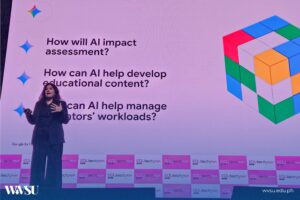
The program also featured practical showcases on how schools can establish and grow robotics programs, how artificial intelligence can support and enhance essay writing and other academic processes, the use of AI-powered platforms to strengthen self-directed learning, innovative methods for simplifying medical and health science concepts for 21st-century learners, and strategies for developing future-ready school ecosystems where AI-driven tools support—but do not replace—daily instruction.
WVSU’s participation in EDUtech Asia reflects the University’s commitment to global engagement and its continued pursuit of innovative, human-centered approaches to teaching and learning.
By Gladwyn B. Gustilo/ILLO