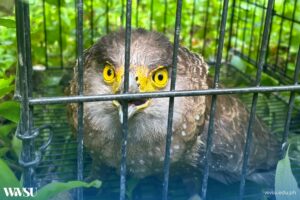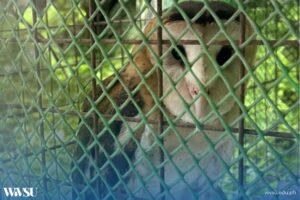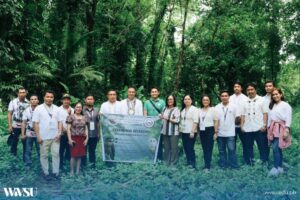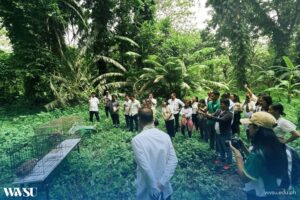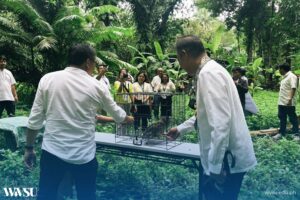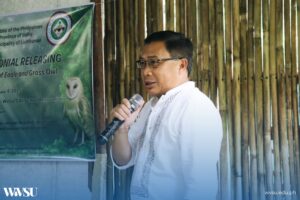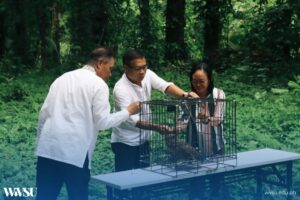

In celebration of Environment Month, West Visayas State University–College of Agriculture and Forestry (WVSU-CAF), in partnership with the Local Government Unit (LGU) of Lambunao and the Department of Environment and Natural Resources (DENR) Region 6, led a ceremonial release of two rescued raptors back into the wild. The Serpent Eagle (Spilornis holospilus) and Eastern Grass Owl (Tyto longimembris) were set free in a moving tribute to nature and a reaffirmation of the university’s role as an environmental steward.
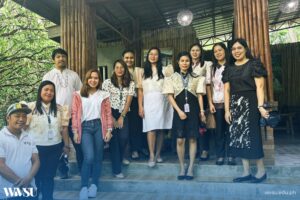
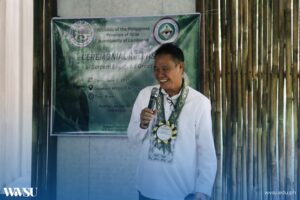
The event was spearheaded by Dr. Joel A. Araquil, Sr., Campus Administrator of WVSU-CAF, along with MENRO Lambunao Head Mr. Leony Loot, and DENR representatives Foresters Gloria Flores and Carlo Legada. Faculty and staff of WVSU-CAF also took part in the occasion, symbolizing institutional unity in the mission of conservation.
Healing Wings: Rehabilitation and Assessment
The raptors, though categorized under the IUCN Red List as species of “Least Concern,” were rescued due to injury and environmental stress. They were brought under the care of WVSU-CAF’s veterinary team, led by Dr. Jb Ian Bullo, who conducted comprehensive assessments to ensure their recovery and readiness for release.
Mariit Wildlife Conservation Center: A Safe Haven
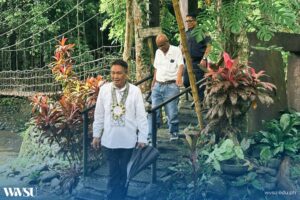
The release took place at the Mariit Wildlife Conservation Center, a protected sanctuary managed by WVSU-CAF. The center hosts various endemic and threatened species, benefiting from its dense forest canopy, elevation, and isolated terrain—ideal conditions for raptor survival and biodiversity preservation.
Beyond being a habitat, Mariit serves as a learning and research facility, allowing students and researchers to engage directly with conservation work while promoting environmental awareness among communities.
Birds as Ecological Indicators
Birds such as the Serpent Eagle and Eastern Grass Owl are vital components of the food chain and are key indicators of a healthy ecosystem. Their population health often reflects the state of biodiversity and the impacts of human activity on the environment.
Educational Commitment to Environmental Stewardship
WVSU-CAF integrates biodiversity conservation into its academic and community extension programs. The release is part of a broader initiative to instill a culture of environmental responsibility among students and stakeholders, from classroom instruction to real-world application.
As the two birds took flight, they carried with them a message—one of resilience, harmony, and shared duty. The event was not just a scientific success or a ceremonial milestone; it was a reminder that the health of our environment lies in cooperative action.
Through continuous partnerships with LGUs, DENR, and local communities, WVSU-CAF stands firm in its role as a guardian of nature—educating minds and nurturing ecosystems.
By Gladwyn B. Gustilo/ILLO