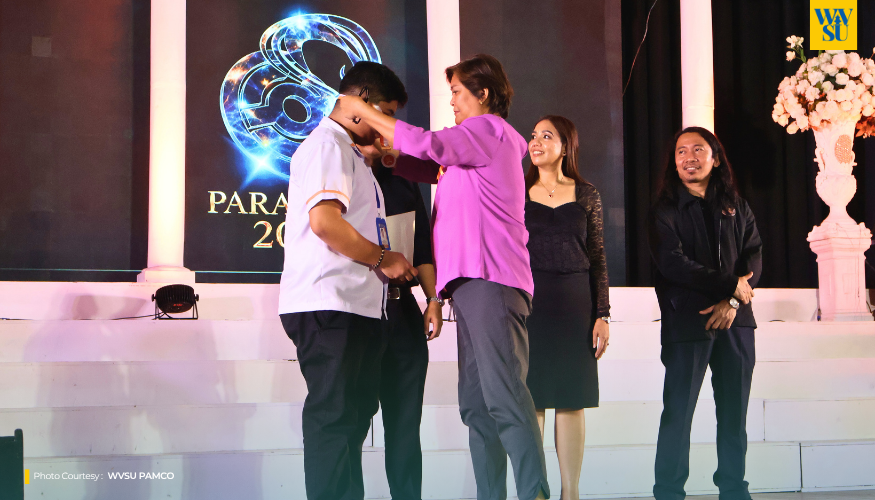
The West Visayas State University College of Information and Communications Technology (WVSU CICT) recognized outstanding student achievement during its Recognition Program, Parangal 2026, held May 29, at the WVSU Cultural Center.
The ceremony gathered students, faculty members, parents and university officials in celebrating the academic and non-academic accomplishments of CICT learners for Academic Year 2025–2026.
Serving as inspirational speaker was Mr. Herbert M. Saladar, co-founder and product and engineering lead of Haraya Digital and a graduate of the Bachelor of Science in Information Management Batch 2008. Drawing from his experiences in the technology industry, Saladar encouraged students to remain adaptable, innovative and purpose-driven as they prepare to enter the professional world.
The presentation and awarding of academic and non-academic awardees were led by Dr. Ma. Beth S. Concepcion, dean of CICT, and witnessed by Dr. Ma. Pilar S. Malata, dean of the Office of Student Affairs.
Among the highlights of the program was the message delivered by Louise Angelika O. Pahilanga of the Bachelor of Library and Information Science program, who was recognized as the Most Outstanding CICT Graduate in Academics. In her message, Pahilanga reflected on the challenges, sacrifices and perseverance behind every achievement, while expressing gratitude to the people who supported the students throughout their academic journey.
Closing the ceremony was Dr. Cureneo S. Dofitas Jr., chairperson of CICT Parangal 2026, who commended the awardees for their dedication and encouraged them to continue embodying excellence and service beyond the university. The recognition program forms part of the culminating activities of the University ahead of its commencement exercises, honoring students who excelled in academics, leadership and service throughout the academic year.
Category: Academic News
-
WVSU CICT honors student excellence in Parangal 2026 recognition program
-
WVSU College of PESCAR honors achievers, celebrates LEPT milestones at Pasidungog 2026
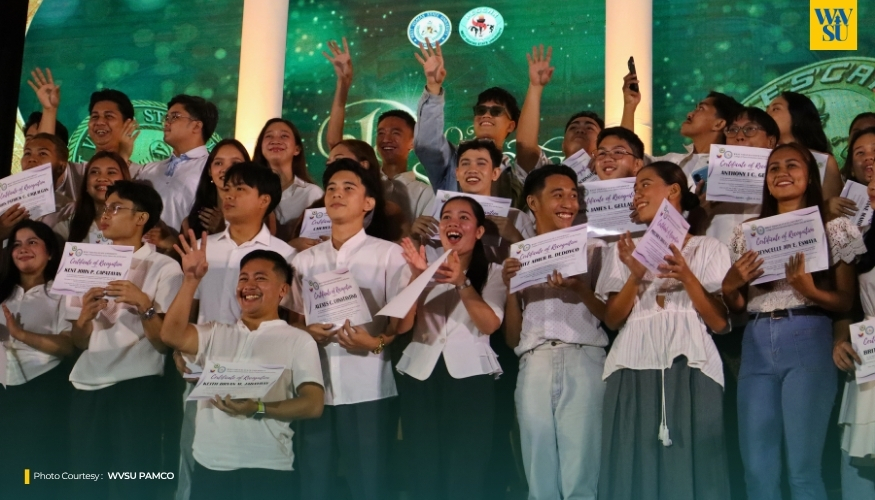
West Visayas State University (WVSU) College of Physical Education, Sports, Culture, Arts and Recreation (PESCAR) recognized outstanding student achievers and celebrated major milestones in teacher education during “Pasidungog 2026,” its annual recognition program held May 29 at the WVSU Cultural Center.
The event brought together students, parents, faculty members, alumni, and university officials to honor academic excellence, leadership, service, and co-curricular achievements across the college’s programs.
A highlight of the ceremony was the recognition of the college’s March 2026 licensure examination achievements, including its 100 percent passing rate in the Licensure Examination for Professional Teachers (LEPT). The program also featured a message from Keith Bryan M. Jabaybay, LPT, who secured Rank 8 in the March 2026 LEPT and became the College of PESCAR’s first-ever LEPT topnotcher.
Awards were presented to students who demonstrated excellence in both academic and non-academic pursuits, reflecting the college’s commitment to developing well-rounded future educators, coaches, artists, and recreation professionals.
Guest speaker Atty. Jhon Edmar Divinagracia Espinosa, police captain and servicing legal officer of the Philippine National Police Legal Service, delivered an inspirational message to the awardees and attendees.
Academic and non-academic awardees received medals and certificates from Dr. Alona M. Belarga, director for Instruction, and Dr. Ma. Pilar S. Malata, dean of the Office of Student Affairs, together with College of PESCAR Dean Dr. Porferio J. Barlas Jr., who also delivered the welcome remarks, alongside college administrators and faculty members.
The program also included the induction of the 2026-2027 College of PESCAR Student Council officers. Musical performances were led by Himig Kanluran sa Visayas, while the Irong-Irong Dance Company rendered a dance number and WVSU TeatroTayo showcased a performance that celebrated the graduating batch and the college community.
Dr. Paulo C. Abrico, chairperson of the Academic Awards Committee and chair of the Department of Physical Education, Sports and Recreation, delivered the closing remarks.
Through Pasidungog 2026, the College of PESCAR reaffirmed its commitment to nurturing competent, innovative, and service-oriented professionals who embody WVSU’s tradition of excellence and leadership in education, sports, recreation, and the arts. -
WVSU College of Dentistry honors future clinicians, achievers in “Parangal 2026”
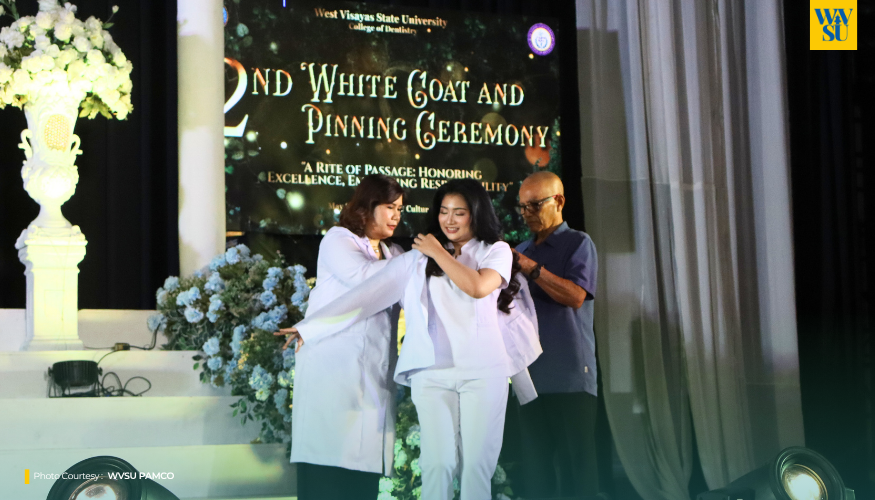
The West Visayas State University College of Dentistry formally welcomed its future clinicians during the 2nd White Coat Ceremony and Recognition Rites, “Parangal 2026,” held May 28 at the WVSU Cultural Center.
The ceremony marked a milestone for dental students as they donned their white coats, received their pins, and took the clinicians’ pledge, symbolizing their transition into clinical training and patient care. The event also recognized outstanding student achievements in academics, leadership, sports, sociocultural, and special categories.
In his message, WVSU President Dr. Joselito F. Villaruz reminded students to uphold integrity and compassion as they enter the profession.
“As you don your white coats and receive your pins today, wear them not only with pride, but with purpose. Let these symbols remind you of your responsibility to serve with honesty, competence, and a genuine heart for service,” Villaruz said.
In a video message, Department of the Interior and Local Government Undersecretary Jed Patrick E. Mabilog also shared words of inspiration to the students, commending the college for its dedication, resilience, and unwavering support. He likewise expressed his hopes for the continued success of the college as it inspires, uplifts lives, and brings pride to WVSU, Iloilo, and the nation.
Guest speaker Dr. Abigail Joy E. Marañon emphasized the role of ethical and compassionate care in dentistry.
“Our mission is to provide high quality, ethical patient care because we set the tone, we will set the tone for excellence in the field of dentistry. You already share this responsibility with us and I hope that you will also find joy in being of service to others through patient care,” she said.
Marañon earned her Doctor of Dental Medicine degree from the University of the Philippines Manila in 2007 and underwent further training in pediatric dentistry, dental public health, and oral surgery. She currently serves as Dentist III at the West Visayas State University Medical Center and as a senior lecturer at the WVSU College of Dentistry.
The program also featured the oath-taking of officers, a response from the clinicians, and the presentation of awardees, highlighting the college’s commitment to academic excellence and service-oriented dental education. -
WVSU-CAS honors academic excellence, leadership in “Parangal” rites
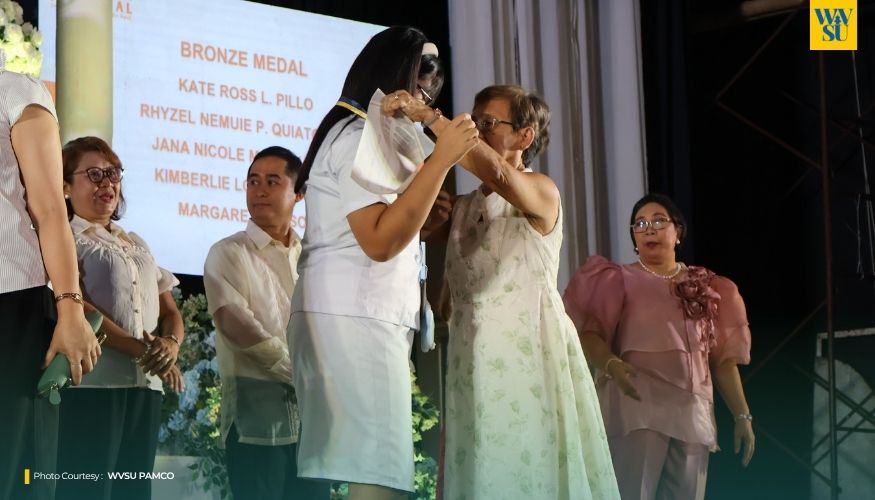
The West Visayas State University College of Arts and Sciences recognized outstanding students, graduates, and faculty members during its 2026 “Parangal” ceremony held Thursday, May 28, at the WVSU Cultural Center, celebrating academic achievement, leadership, and service across the college’s degree programs.
The ceremony gathered awardees from AB English Language Studies, AB Foreign Language, AB Political Science, BS Applied Mathematics, BS Biology, and BS Chemistry, together with their parents, faculty members, and university officials.
In her welcome message, CAS Dean Dr. Bonna S. Palma reminded students to “Remember who you are,” emphasizing that education should not only sharpen the mind but also nurture the heart.
The program featured an inspirational message from Atty. Exfedeo T. Arondain, deputy provincial prosecutor of Guimaras and a Bachelor of Arts in English alumnus from Batch 2008.
Arondain encouraged students to “Continue cultivating your education, maximizing your impact, and leading with distinction. After all, you are the master of your day and the captain of your ship.”
He also underscored the value of perseverance and commitment among students, saying, “Dedication is the staple of success. It is the driving force why you continue to study and pursue your dreams. It is the fuel that drives you to pull an all-nighter.”
Among the highlights of the ceremony were the recognition of NMAT topnotchers, recipients of the Best Thesis Awards, and the conferment of the CAS Most Outstanding Graduate award to Bryl Christian R. Sario of the AB Foreign Language program.
Special citations were also given to CAS faculty members for their contributions in research and extension services, while the induction of the 2025-2026 CAS Student Council officers capped the event.
The ceremony concluded with closing remarks from CAS Associate Dean Prof. Saturnino Luke A. Sobrevega, followed by the university march, exit of colors, and recessional. -
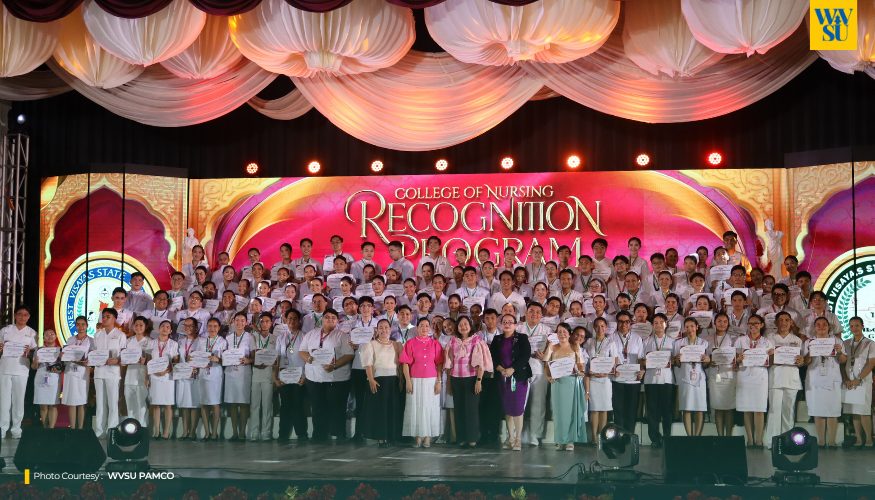
WVSU College of Nursing honors student excellence in 2026 Recognition Program
The West Visayas State University (WVSU) College of Nursing recognized student achievement in academics, leadership, service, and research during its Recognition Program for Academic Year 2025-2026 held May 27 at the WVSU Cultural Center.
The event gathered students from first to fourth year levels, along with their parents, faculty members, and university officials, in a formal celebration of the accomplishments of future healthcare professionals who demonstrated excellence inside and outside the classroom.
WVSU College of Nursing Dean Dr. Madonna Palmes underscored the importance of recognizing not only academic performance but also the values formed throughout nursing education, including dedication, compassion, leadership, and commitment to service.
A wide range of awards were presented during the program, covering academic distinctions, leadership and service achievements, and research contributions in local, national, and international conferences. Both student and faculty researchers were also recognized for studies and presentations focusing on healthcare practice, public health, nursing leadership, and community-based concerns.
Among the special awards given were the Best in Related Learning Experience (RLE) Performance, Best in Clinical Performance, Best in Community Health Nursing (CHN), Leadership Award, and Most Outstanding Student Nurse of the Year.
University officials joined the awarding ceremonies, led by Vice President for Medical and Allied Sciences Dr. Victorino Salcedo III and Office of Student Affairs Dean Dr. Ma. Pilar Malata, together with faculty representatives from various divisions: Prof. Junah C. Villanueva, Guidance Facilitator; Prof. Dexter P. Cendaña of the Division of Nursing Fundamentals; Dr. Arlyn F. Salistre of the Division of Maternal and Child Health Nursing; Ms. Rhoda Mae G. Laspiñas of the Division of Adult Health Nursing; and Prof. Emily E. Robite of the Division of Professional Nursing, along with other college administrators and faculty members.
Prof. Maylin P. Habaña, chairperson of the Awards and Recognition Working Committee, delivered the closing remarks.
The recognition program reflects the university’s continuing commitment to forming competent, compassionate, and globally competitive healthcare professionals who embody WVSU’s culture of excellence and service. -
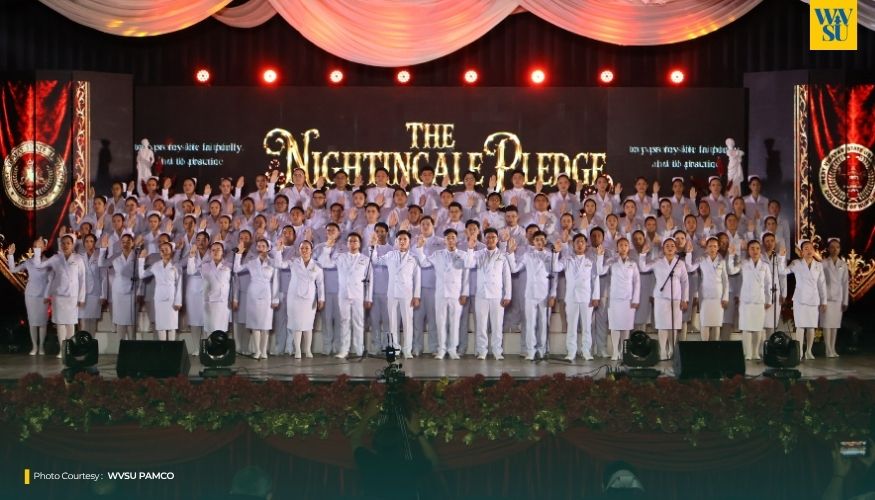
Batch Vesta marks milestone in WVSU College of Nursing pinning ceremony
Eighty-nine nursing students of the West Visayas State University College of Nursing were formally welcomed into the next stage of their professional journey during the Class of 2026 Pinning Ceremony held May 27 at the WVSU Cultural Center.
Batch Vesta participated in the traditional ceremony symbolizing their commitment to the nursing profession and their readiness for clinical training and patient care.
University President Dr. Joselito F. Villaruz delivered his inspirational message through a video presentation, reminding the students of their duty to serve with compassion, integrity and professionalism as future healthcare workers.
College of Nursing Dean Dr. Madonna S. Palmes, together with faculty members, led the donning of pins, while the students also recited the Nightingale Pledge and the Nurse’s Prayer during the ceremony.
Inspirational speaker Alfonso Noli Combong, a WVSU nursing alumnus and retired lieutenant commander of the U.S. Navy Reserve Nurse Corps, encouraged Batch Vesta to embrace the limitless possibilities ahead of them in the healthcare profession.
“Your future is limitless. You may become a leader, a provider, or an educator, or the nurse who changes someone else’s life in one single moment,” Combong said. “Class of 2026, you are ready. Ready to serve, ready to lead, ready to make a difference in ways you don’t even realize it yet. Go forward, with skill, with courage, and with purpose, and never forget lives will change because of you.”
The pinning ceremony marked a milestone for the 89 students as they move closer toward becoming professional nurses committed to service and excellence in healthcare. -
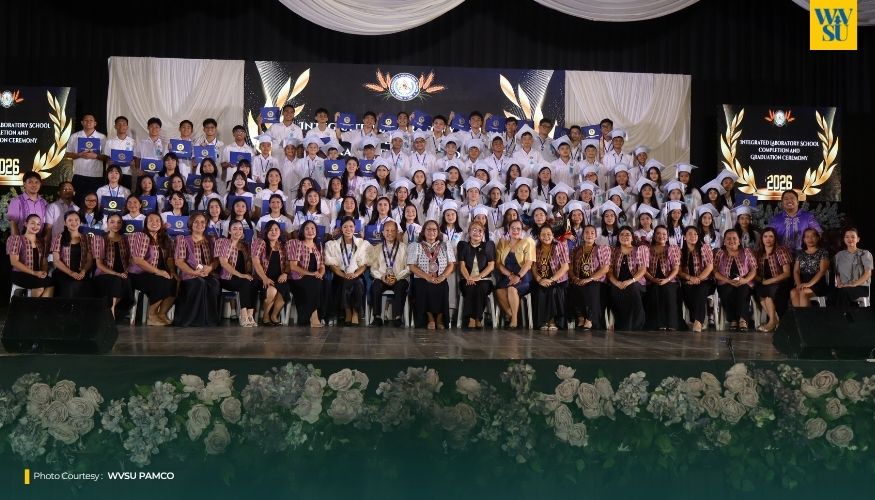
WVSU-ILS honors 87 completers, graduates in 2026 rites
West Visayas State University Integrated Laboratory School honored 87 completers and graduates during its 2026 Graduation and Completion Ceremony on May 26 at the WVSU Cultural Center.
The ceremony recognized 48 Grade 6 completers and 39 Grade 10 graduates for their academic achievements and perseverance throughout the school year.
Prof. Mary June D. Pineda, director of the Integrated Laboratory School, led the presentation of candidates for completion and graduation, while Prof. Rosemarie Galvez Felimon formally confirmed the graduates and completers and presided over the distribution of diplomas.
Delivering the inspirational message, Dr. Hazel P. Villa, director of the Public Affairs, Marketing and Communications Office and a member of SLS Batch 1990, urged students to continue striving for growth beyond academic recognition. “Because ‘Basta Taga-ILS, we don’t settle for less’ is not only for those who are already excellent. It is also for those who are still becoming,” Villa said.
She also reminded students not to define themselves by failures or awards alone. “Do not settle for being called weak. Do not settle for being told you are not smart enough. Do not settle for the idea that one failure defines you,” she said.
The program also featured valedictory and messages of gratitude from Duke Stephen M. Amaro of the Elementary Department and Unah Angel Gabrielle R. Robante of the Junior High School Department. Completers and graduates were later inducted into the WVSU University Alumni Affairs Director Jonathan C. Glorial, PhD -
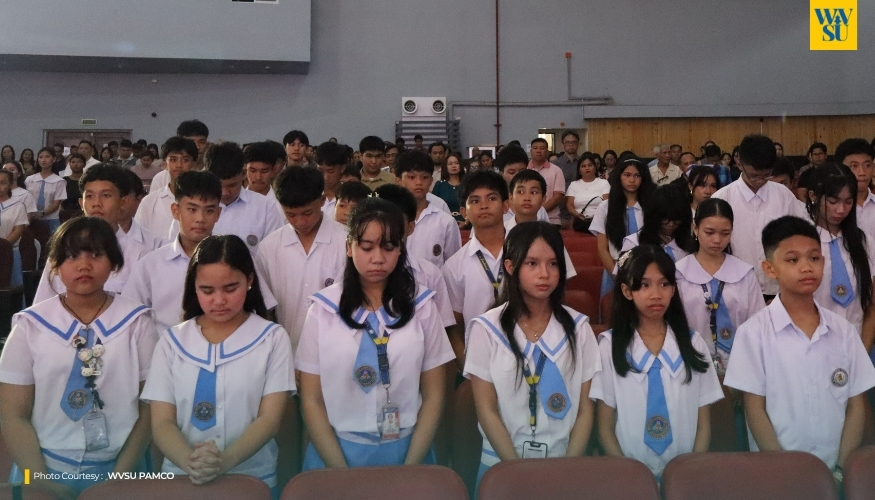
WVSU ILS recognizes academic excellence, leadership in recognition ceremony
The West Visayas State University Integrated Laboratory School (WVSU ILS) honored outstanding student achievement and leadership during its Recognition Ceremony held on May 25, at the WVSU Cultural Center.
The ceremony gathered students, parents, teachers and university officials in celebrating the academic excellence, service and achievements of ILS learners for Academic Year 2025–2026.
In her welcome remarks, Prof. Mary June Pineda, ILS director, encouraged the awardees to pursue excellence with humility, gratitude and good character, emphasizing that medals and citations become more meaningful when complemented by right conduct and courtesy toward others and God.
Pineda also echoed the ILS battle cry of not settling for anything less, urging students to “always practice excellence and be the better version of yourself sa isip, sa salita, at sa gawa,” while reminding them that good manners and proper conduct matter more than awards and recognitions.
Delivering the inspirational message was Mrs. Jennifer Javier-Woda, associate sales director of Penguin Random House and a member of the then Secondary Laboratory School Batch 1990.
Drawing from her professional and personal experiences, Javier-Wodam encouraged the students to pursue excellence with humility, resilience and purpose.
The presentation of academic and non-academic awards followed, witnessed by Pineda, Dr. Alona Belarga, director of the Office of Instruction, and Dr. John Erwin Pedroso, associate dean of the College of Education Graduate School.
The program also included the presentation of non-graduating academic awardees, special citations and service awards, recognizing students who demonstrated excellence not only in academics but also in leadership, participation and service.
Adding entertainment to the ceremony was an intermission performance by Reese Mary Lexi Serrudo and Yera Quisha Ramos of Grade 8 – Venus.
Selected student honorees also delivered messages during the ceremony, reflecting on the lessons, challenges and values they gained throughout their academic journey.
Mikhaela Ysabelle Baño, Rank 2 with High Honors in the elementary level, shared that elementary life was not only about classroom lessons, but also about friendships, resilience and shared experiences that shaped the students’ character. She emphasized that every learner carries a unique story marked by hard work, struggles and perseverance, while recognizing the role of the people who supported them along the way.
Meanwhile, Helen Natalie Bolivar, Rank 2 with High Honors in the junior high school category, reflected on the meaning of excellence beyond grades and academic achievement. She reminded fellow students that while striving for success is important, maintaining balance, humanity and meaningful relationships is equally valuable in becoming truly excellent individuals.
One of the highlights of the recognition rites was the turnover of the Symbolic Light of Excellence, signifying the passing of academic leadership and inspiration to the next batch of student achievers.
The symbolic light was handed over by Unah Angel Gabrielle Robante, Rank 1 with High Honors of Grade 10 Jupiter, to Duke Stephen Amaro, Rank 1 with High Honors of Grade 6 Malikhain.
The recognition ceremony forms part of the culminating activities of WVSU ILS ahead of its graduation rites scheduled on May 26 at the WVSU Cultural Center, where graduating learners will formally conclude their academic journey for the school year. -
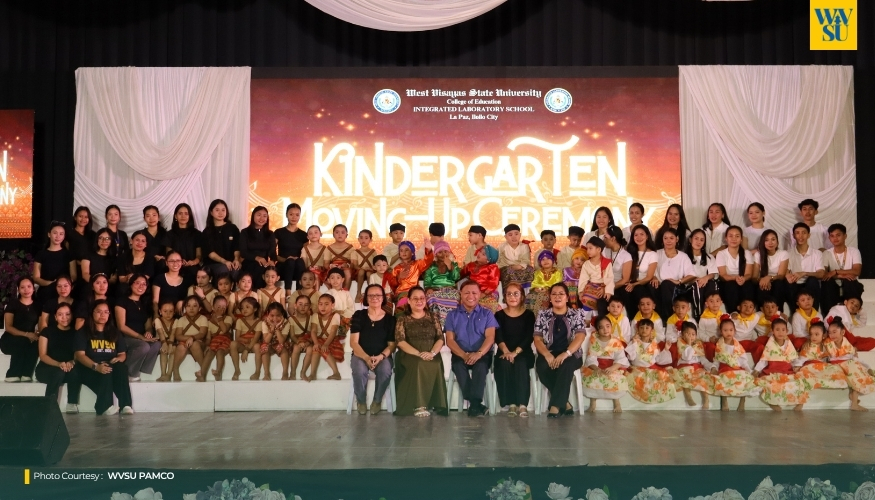
WVSU ILS honors 44 kindergarten pupils in moving up ceremony
The West Visayas State University Integrated Laboratory School (WVSU ILS) honored the 44 members of the Kindergarten Malambing Batch 2026 during its Moving Up Ceremony held today at the WVSU Cultural Center, celebrating the pupils’ completion of preschool education for Academic Year 2025–2026.
Families, teachers and guests filled the venue as the young learners marked their first academic milestone and prepared to transition to elementary education.
Prof. Mary June Pineda, ILS director, formally presented the kindergarten completers during the ceremony. Following the presentation of graduates, certificates were awarded by Pineda together with Dr. Michael Caesar Tubal, chairperson of the Division of Elementary Teacher Training; Prof. Jan Iris Faye Basbas, ILS guidance counselor; and Dr. John Erwin Pedroso, associate dean of the College of Education Graduate School.
The program highlighted not only the pupils’ academic achievements but also their creativity and appreciation of Filipino culture through a series of performances prepared by the learners and teachers.
Adding a nostalgic touch to the celebration was the movie presentation titled “Kindergarten: Tiny Moments, Big Smiles,” presented by Mikaella Gianna Solas. The audiovisual presentation featured classroom memories, school activities and candid moments shared by the pupils throughout the academic year.
The audience was also treated to a cultural stage play titled “Dances of the Philippines,” which showcased traditional dances representing the country’s major island groups.
Among the featured performances were “Luzon: Ragragsakan,” “Visayas: Cariñosa” and “Mindanao: Kinakulangan,” with the kindergarten pupils taking the stage in colorful traditional-inspired costumes and lively choreography.
An intermission number was rendered by Astrid Reus Aventura, a Grade 1 pupil, while kindergarten practice teachers also performed a special intermission presentation for the completers and their families.
The moving up ceremony concluded with the graduation song “Ready to Go,” as the Kindergarten Malambing Batch 2026 sang alongside their classmates and teachers in a heartfelt finale symbolizing both gratitude and new beginnings.
WVSU ILS offers Kindergarten to Grade 10 education and serves as a training hub for preservice teachers of West Visayas State University, providing future educators with experiential learning opportunities in classroom instruction, child development and student engagement. -
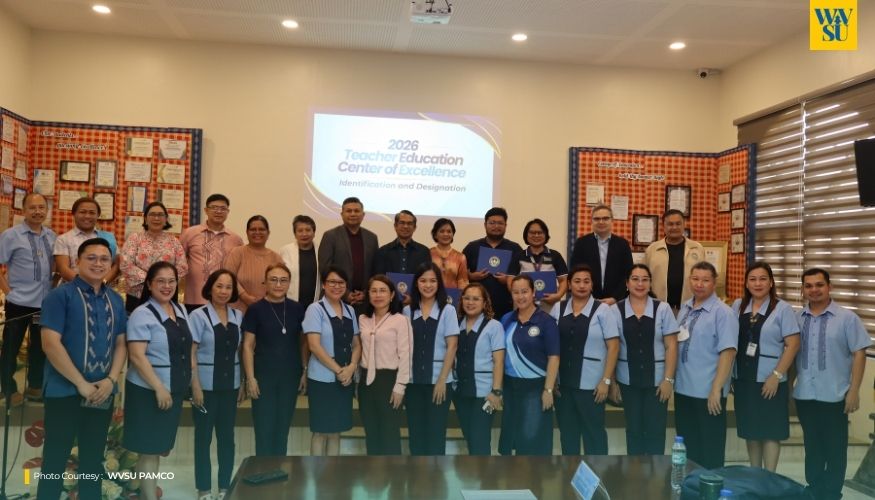
WVSU concludes Teacher Education Council evaluation visit
West Visayas State University concluded the second day of the 2026 Teacher Education Centers of Excellence (COE) Identification and Designation Field Visit on May 13, with forums involving students, alumni, and extension stakeholders as part of the evaluation process led by the Teacher Education Council.
Selected students from various undergraduate teacher education programs shared their experiences on academic instruction, student support, and campus services during the student consultation forum. Alumni representatives from various educational institutions and leadership positions also participated in discussions validating graduate outcomes and professional engagement among graduates of the university’s teacher education programs.
Extension coordinators and partner stakeholders also presented collaborative initiatives and community-based programs implemented by the university to demonstrate the sustainability and impact of its extension services.
Following the consultation sessions, the TEC Field Visit Team proceeded with deliberations and report writing at the WVSU Board Room to consolidate findings from the two-day assessment.
During the closing program, TEC Secretariat Lead Mariz Geraldine A. Jose emphasized that the university’s final evaluation would still undergo a comprehensive review. “The final recommendation will be based on the comprehensive evaluation of your institution’s performance against the established criteria,” Jose said after presenting the team’s general observations.
Vice President for Academic Affairs Ma. Asuncion Christine Dequilla, meanwhile, underscored the university’s commitment to continuous improvement and service through teacher education. “We leave today with renewed clarity about where we stand and, more importantly, renewed resolve about where we are going,” Dequilla said.
“This professional courage is not small; it is, in fact, exactly the spirit we hope to cultivate in every teacher we send out from this institution. Carry this forward. West Visayas State University continues as it always has, doing things para sa Bayan, para sa Guro, para sa Bata,” she added.