For West Visayas State University (WVSU) Secondary Laboratory School (SLS) Batch 1989, coming home was more than a chance to revisit old memories. Their reunion became an opportunity to give back.
Through two outreach activities held on July 4 and 5 under the theme “Batch ’89 Giving Back: Excellence and Gratefulness,” the alumni brought together their time, resources, and professional expertise to serve both their alma mater and communities beyond the University. The initiative was led by Organizing Committee Head Mary Theobelle Parreno-Lopez.
The first stop was the Pediatric Ward of the WVSU Medical Center, where the batch donated three pediatric cribs, a 43-inch smart TV, a bookshelf containing 40 hardbound books, educational toys and activity materials, and 80 vacutainers. Beyond the donations, members of the batch spent time with patients and hospital staff, turning what could have been a simple act of giving into an afternoon of presence and connection.
The following day, Batch 1989 brought the same spirit of service to the Ati Village in Lanit, Jaro, reaching 50 families with rice, vegetables, basic medicines, slippers, school supplies, hygiene kits, and pantry goods.
But the outreach was not limited to what could be placed in a donation bag. Drawing from the diverse professions of its members, the alumni also organized a storytelling session, a basic hygiene session, and medical consultations. Members from the education, nursing, and medical fields shared their knowledge and spent time engaging with the community. The activity culminated in a shared meal of arroz caldo prepared together with community members.
The batch was connected to the community through Mr. John Paul Petrola, Director of the University of San Agustin’s Center for Heritage and Indigenous Cultures.
One of the more personal dimensions of the outreach was the batch’s commitment to support Ms. Rowela Palacios, a member of the Ati community and a 2019 graduate of the WVSU College of Education. The alumni are supporting her in completing her remaining K-12 units so she can qualify to take the licensure examination for teachers.
For Batch 1989, giving back has also found its way home. The alumni donated a whole-body walkthrough scanners and a baggage X-ray machine, installed at the University’s gates, as part of efforts to strengthen campus security and help ensure the safety of students and the wider WVSU community.
These acts may have taken different forms — a hospital donation, a community outreach, support for an aspiring professional, or a contribution to campus safety — but they share a common thread: a desire to turn gratitude into something tangible.
A reunion often brings people back to where a shared story began. For WVSU SLS Batch 1989, that return became an opportunity to carry something forward.
Their story is a reminder that the ties built in school can extend far beyond graduation. Years after leaving the halls of WVSU, the values, friendships, and sense of community formed there can continue to find expression through service.
For Batch 1989, giving back is more than remembering where they came from. It is finding ways to make what they received matter to someone else.
WVSU expresses its gratitude to the WVSU SLS/High School Batch 1989 for continuing to remember its alma mater and for turning a celebration of shared memories into meaningful acts of service.
Category: Linkages
-
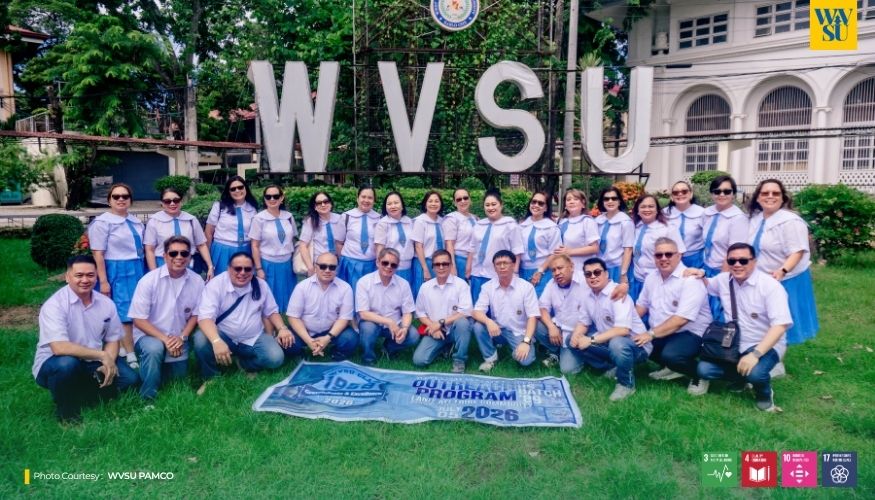
More than a reunion: WVSU SLS Batch 1989 finds new ways to give back
-
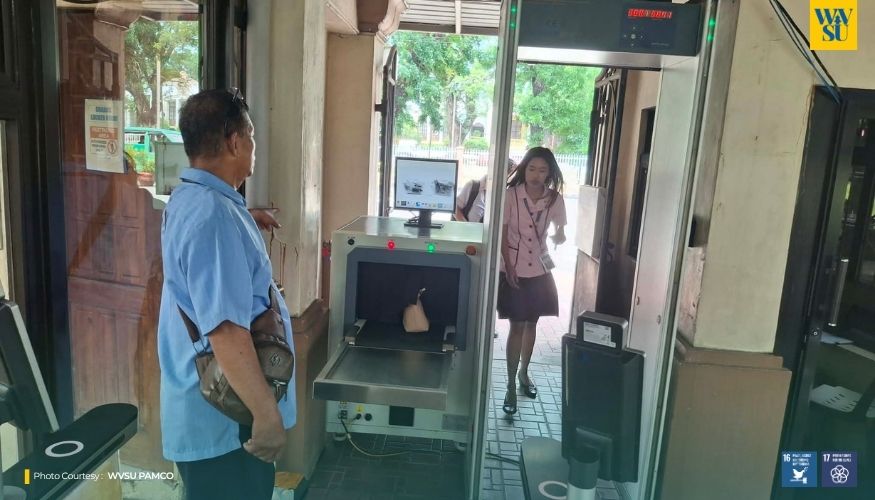
WVSU installs walkthrough scanner and x-ray machine at entrances to strengthen campus safety and security
West Visayas State University has further strengthened its campus security with the installation of another whole-body walkthrough scanner at the Elementary Gate and a baggage X-ray machine at the Main Gate.
The additional security equipment, donated by WVSU High School Batch 1989 and Safety PH Innovation Inc., forms part of continuing efforts to help keep students, faculty, staff, and visitors safe while inside the University.
The University asks everyone’s cooperation in following campus security protocols and submitting to the required inspection upon entry. These measures are in place for everyone’s safety and security. Thank you for your understanding and cooperation as we work together to keep WVSU a safe and secure community. -
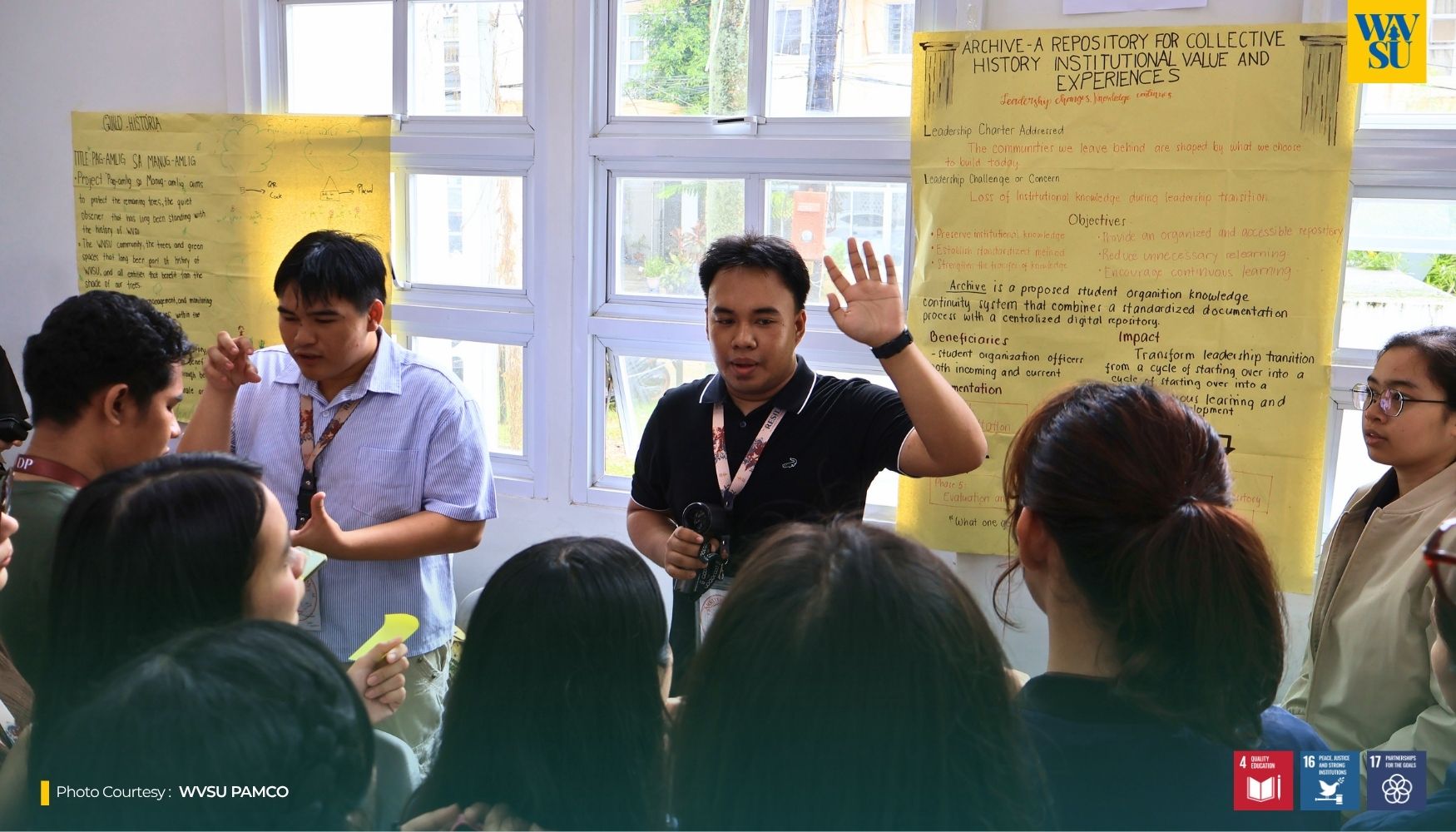
WVSU student leaders put learning into action through Guilds Summit, culminating SLDP 2026
West Visayas State University (WVSU) student leaders brought the three-day Student Leadership Development Program (SLDP) 2026 to a close on Aug. 29, turning lessons on leadership, collaboration, and resilience into concrete advocacy initiatives during the Guilds Summit.
Held under the theme “Resilience: The Strength to Continue, The Vision to Advance,” SLDP 2026 brought together more than 170 student leaders from the University Student Council, College Student Councils, university-wide and college-based student organizations, and student publications. Participants were organized into eight guilds — Architectura, Philosophia, Ars, Humanitas, Historia, Rhetorica, Natura, and Innovatio — throughout the program.
From ideas to advocacy
On the final day, the eight guilds gathered in classrooms at Quezon Hall to develop and refine their advocacy initiative proposals based on their assigned leadership charters, values, and focus areas.
The Guilds Summit provided the student leaders a platform to translate their experiences throughout SLDP into initiatives addressing needs within the University community.
The proposed initiatives included Architectura’s “Archive,” a cloud-based repository designed to preserve organizational history and institutional memory and support continuity during leadership transitions; Philosophia’s “Project Pause,” a three-part leadership training program for senior high school students; and Ars’ “Project Kab-ot: Kabataan, Abot ang Pangarap,” which uses art and literacy activities to support children at risk.
Humanitas’ “Kapwa” proposed peer-facilitation training for college students, while Historia’s “Pag-amlig sa Manug-amlig” sought to preserve the stories and experiences connected to trees on campus through tree labels and QR-linked oral histories. Rhetorica’s “Project Makisalamuha” proposed a feedback and solutions-tracking mechanism to improve coordination between offices and student organizations.
Meanwhile, Natura’s “E-Collect” focused on proper bottle disposal and recycling while generating resources for student organizations, and Innovatio’s “Project Share” proposed a university community pantry for students, colleges, offices, and organizations to share and access needed materials.
The proposals demonstrated the guilds’ application of teamwork, communication, critical thinking, and collaborative problem-solving toward initiatives with potential value to the University community.
Recognizing leadership and participation
The Guilds Summit also recognized excellence in project pitching and initiative development. Natura emerged as champion of the Guild Leadership Initiative Pitch, followed by Humanitas as first runner-up and Innovatio as second runner-up.
Special awards were likewise given to the guilds for their respective strengths:
Best Project Pitch: Natura
Best in Question and Answer: Humanitas
Best in Leadership Charter Alignment: Natura
Most Relevant and Significant Initiative: Humanitas
Most Innovative Initiative: Innovatio
Best in Feasibility and Sustainability: Historia
Closing a journey of formation
SLDP 2026 formally concluded with a closing program featuring messages from participants and SLDP 2026 Chairperson Adriane T. Legislador, reflecting on the lessons and experiences gained throughout the three-day program.
The closing program also recognized the results of the team-building activity held on Day 2, with Architectura emerging as champion, followed by Historia as first runner-up and Innovatio as second runner-up. The overall SLDP 2026 results likewise named Historia as champion, Architectura as first runner-up, Innovatio as second runner-up, and Humanitas and Natura as third runner-ups. Certificates of participation were also presented to the student leaders who completed the three-day program.
From discussions on resilience and the realities of leadership to sessions on governance, event management, and organizational development, followed by team-building and the Guilds Summit, the program gave student leaders opportunities to learn, connect, collaborate, and put leadership into practice.
As the student leaders return to their respective councils, organizations, and publications, SLDP 2026 challenges them to carry forward the strength to continue and the vision to advance, leading with integrity, purpose, and service.
Through initiatives such as SLDP, WVSU continues to nurture student leaders who are equipped not only to lead their organizations, but also to contribute meaningfully to the University and the communities they serve. -

WVSU student leaders strengthen leadership and resilience on Day 2 of SLDP 2026
West Visayas State University (WVSU) student leaders continued their leadership formation on Aug. 28 as the Student Leadership Development Program (SLDP) 2026 entered its second day, with sessions focused on event leadership, management, and resilience in navigating challenges.
Now on its second day, the three-day program brings together more than 170 representatives from the University Student Council, College Student Councils, university-wide and college-based student organizations, and student publications. This year’s SLDP carries the theme “Resilience: The Strength to Continue, The Vision to Advance.”
The morning sessions focused on practical leadership lessons that student leaders can bring into their respective organizations and activities.
Alumnus John Paul Supapo, a 2023 The Outstanding Student of Iloilo Awardee and currently a faculty member of Dumangas National High School, led the session “Fundamentals of Event Leadership and Management.” The session explored the essential considerations in leading and managing events, helping participants develop a stronger understanding of the planning, coordination, and leadership involved in bringing organizational activities to life.
The second session, “Resilience in Leadership: The Day the Nets Slipped Away,” was facilitated by alumna Sandro Silverio, a Philippine Science High School – Western Visayas Campus teacher and recipient of outstanding student and leadership awards, as well as outstanding teacher awards in 2021 and 2023.
Through the session, participants reflected on resilience as a necessary quality in leadership, particularly when plans do not unfold as expected and leaders are called to respond, adapt, and continue moving forward.
As with the Day 1 sessions, each talk was followed by facilitated open forums and breakout activities, allowing participants to engage with the speakers and connect the discussions to their own leadership experiences.
The afternoon shifted from the classroom to the field as the eight guilds take part in team-building activities, putting collaboration, communication, teamwork, and problem-solving into practice.
The day culminates in the much-awaited Mr., Ms., and Mx. SLDP 2026, bringing participants together for an evening of fellowship, celebration, and camaraderie.
As SLDP 2026 moves into its final day, student leaders will continue building on the lessons and experiences gathered throughout the program, strengthening not only their individual leadership capacities but also the connections they share as members of the WVSU community. -
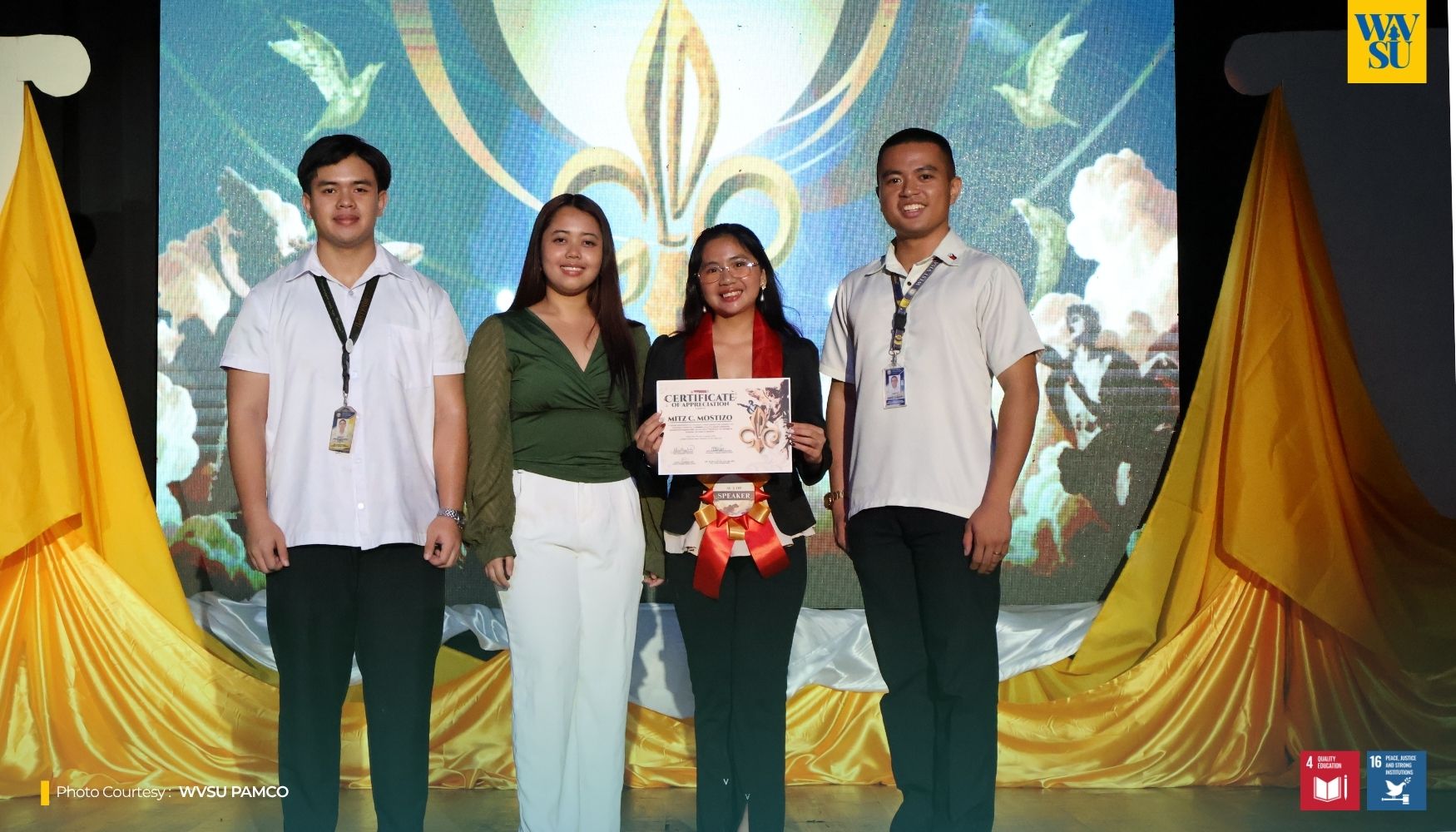
WVSU student leaders begin three-day Student Leadership Development Program 2026
West Visayas State University (WVSU) University Student Council (USC) opened the three-day Student Leadership Development Program (SLDP) 2026 today, Aug. 27, bringing together more than 170 student leaders for three days of leadership formation, learning, and fellowship across the University campus.
Held Aug. 27-29 under the theme “Resilience: The Strength to Continue, The Vision to Advance,” this year’s SLDP is the USC’s flagship leadership formation initiative designed to strengthen the competencies, values, and resilience of student leaders and equip them to lead with integrity, purpose, and service.
The program brings together representatives from the USC, College Student Councils, university-wide and college-based student organizations, and student publications. Participants are organized into groups called “guilds,” creating opportunities for collaboration, shared learning, and meaningful connections among student leaders from different sectors of the University.
Building resilient and purposeful leaders
Day 1 focused on establishing the foundations of resilient student leadership, with sessions centered on personal growth, governance, and the practical responsibilities of leading organizations.
The first session, “When Leadership Hurts. Resilience: The Strength to Continue, The Vision to Advance,” was led by alumna and newly-elected SK Federation Vice President of Nueva Valencia, Guimaras, Mitz Mostizo. The session explored resilience as an essential part of the leadership journey, particularly when student leaders encounter challenges, setbacks, and the difficult realities that come with serving others.
The second session on Governance in Practice entitled “Leading with Order: Parliamentary Procedure, Institutional Leadership, and Policy Writing” was facilitated by WVSU Student Regent and USC Chairperson 2025-2026 Shalene Margrete Joy C. Cachuela. The session introduced participants to practical aspects of organizational governance, emphasizing the importance of structure, sound procedures, institutional leadership, and effective policy writing in guiding student organizations.
Both sessions were held at the WVSU Cultural Center, setting the tone for the succeeding days of the program as participants deepen their understanding of leadership, organizational development, teamwork, communication, and collaborative problem-solving.
Strengthening a community of student leaders
Beyond developing individual leadership competencies, SLDP 2026 seeks to cultivate a stronger network among the University’s student leaders. Through interactive sessions, group activities, and fellowship, the program provides a space where students from different councils, organizations, and publications can learn from one another and build relationships that can extend beyond the three-day program.
The opening day will culminate in a socials night, providing participants an opportunity to strengthen fellowship and celebrate the community they are building throughout the program.
As SLDP 2026 continues through Aug. 29, succeeding sessions will further develop the participants’ capacity to lead organizations, respond to challenges, and contribute meaningfully to the University and the communities they serve.
Through initiatives such as SLDP, WVSU continues to support students not only in their academic pursuits but also in becoming innovative, critical-thinking, resilient, and service-oriented leaders who are prepared to help advance the University and its mission of Transforming Generations. -
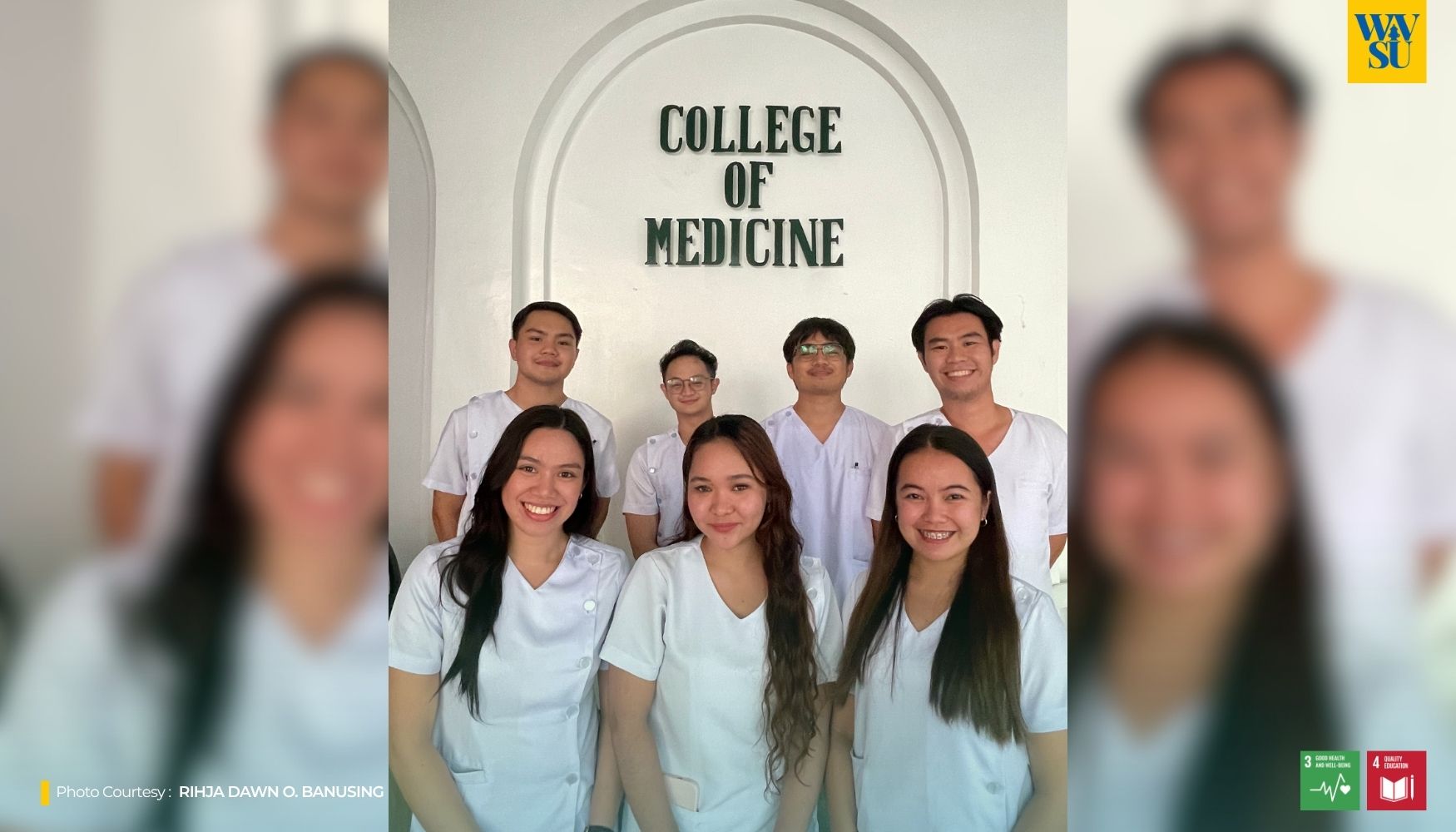
WVSU Medicine first-year students pass MedTech Licensure Exam; one ranks 6th nationwide
Seven first-year students of the West Visayas State University (WVSU) College of Medicine (COM) have passed the August 2026 Medical Technologist Licensure Examination, with one placing among the top 10 nationwide.
Iris Karn V. Magallanes ranked sixth with a rating of 91.80%, highlighting the strong academic preparation and determination of the seven members of WVSU COM Batch Luminei 2030.
Joining Magallanes among the successful examinees are Rihja Dawn O. Banusing, Antonio Dave Chua III, John Rolie I. Consolacion, Oscar Mari G. Fajardo, Femma Joy A. Padroncillo, and Lyx Jady Fyl N. Perez.
The seven students took the licensure examination on Aug. 15 and 16 alongside 5,634 examinees nationwide. All seven completed their undergraduate studies at the University of San Agustin, graduating in June 2026, before beginning their medical education at WVSU the following month.
Their achievement comes at the very beginning of their journey as medical students, demonstrating the discipline and determination they bring with them as they pursue their medical degrees.
WVSU congratulates Magallanes and his fellow Batch Luminei 2030 RMTs on this achievement. The University celebrates their success and hopes that the same grit, excellence, and commitment will continue to guide them throughout their medical education and future careers in healthcare. -
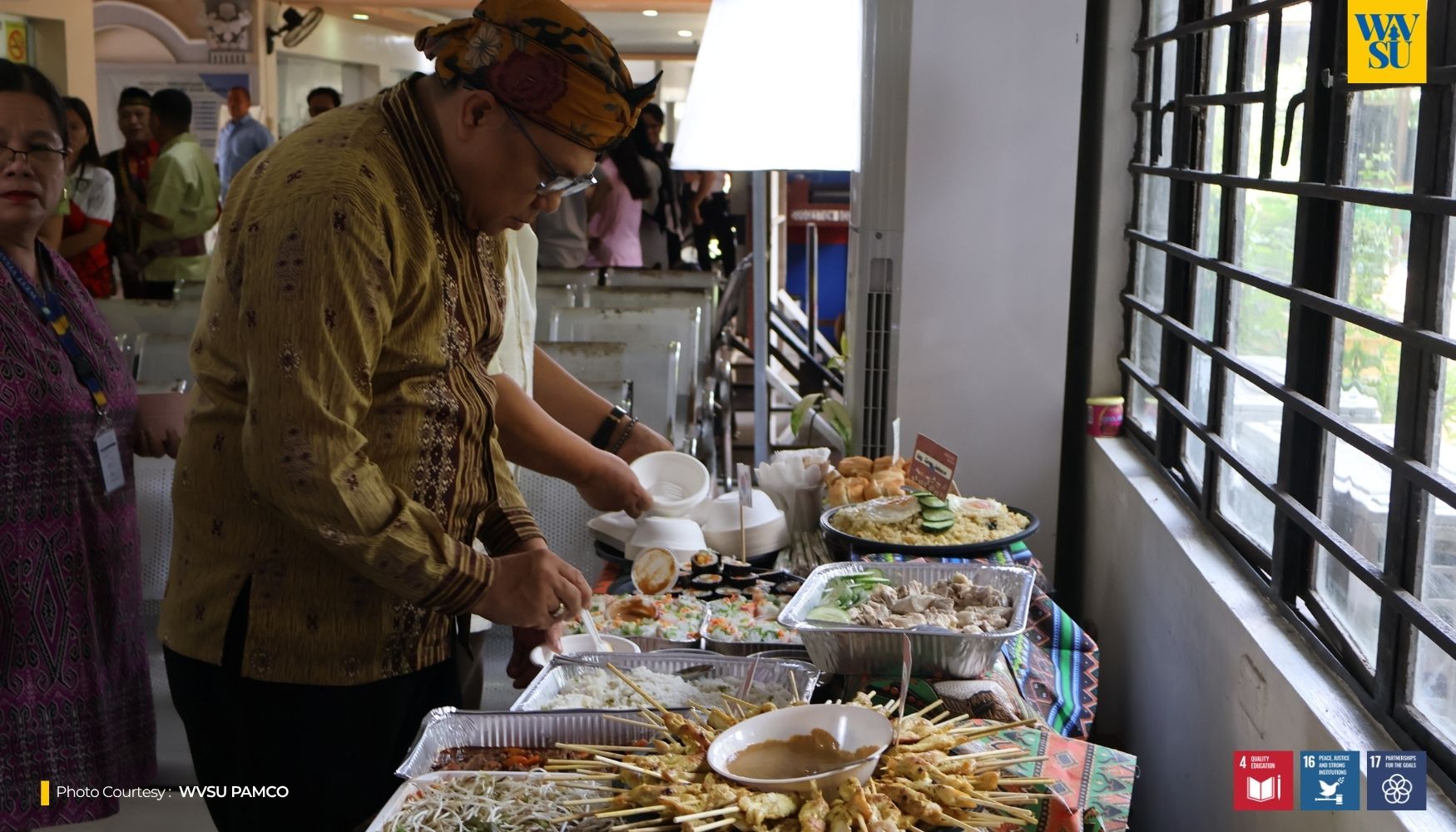
WVSU celebrates 59th ASEAN Day with program, food fest
West Visayas State University (WVSU) celebrated the 59th ASEAN Day on Aug. 24 through a program and food fest spearheaded by the International and Local Linkages Office (ILLO), highlighting the importance of regional solidarity, cultural understanding, and international cooperation in shaping a shared future.
Led by ILLO Director Edel Carmela Subong-Csoka, the celebration formed part of ASEAN Month 2026, observed throughout August, and carried the month’s theme, “Navigating Our Future Together.” The theme underscores the role of higher education institutions in strengthening connections and partnerships across Southeast Asia.
The program featured a keynote message from Dr. Gregorio B. Perez Jr., officer-in-charge director of the Commission on Higher Education Regional Office VI. He engaged the audience through a short trivia game before sharing his message on ASEAN cooperation and unity and the role of higher education in advancing regional collaboration.
In his commitment message, WVSU President Dr. Joselito F. Villaruz emphasized that cultural appreciation can begin with something as simple as sharing a meal.
“Today, we celebrate ASEAN not only as a community of nations, but as a vibrant tapestry of cultures, traditions, and stories,” Villaruz said, noting that food can serve as a common language that brings people together despite differences in customs, languages, and traditions.
He formally opened the food fest, which featured food inspired by the diverse culinary traditions of ASEAN member states. The activity brought together students, faculty, and staff, offering the University community an opportunity to experience Southeast Asian cultures through food and conversation.
The celebration also encouraged participants to express their appreciation of ASEAN culture through their attire, with attendees wearing ASEAN-inspired clothing. Best-dressed participants were recognized during the activity.
Through the celebration, WVSU reaffirmed the value of cultural exchange and people-to-people connections in building a stronger ASEAN community, complementing the University’s continuing efforts toward internationalization and engagement with regional partners. ASEAN Month 2026 also served as a reminder that while Southeast Asian countries may differ in language, traditions, and cuisines, they remain connected by a shared commitment to cooperation, understanding, and a common future. -
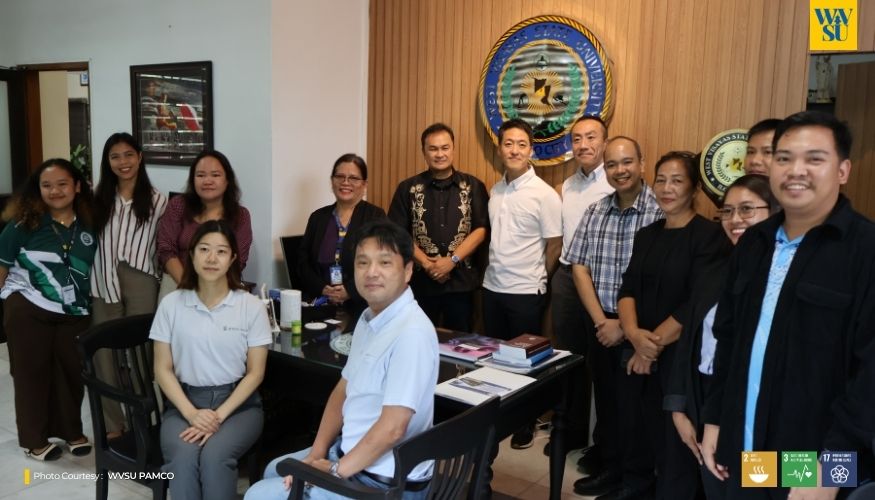
WVSU Strengthens International Research Collaboration Through Green Carbon Project Monitoring Visit
West Visayas State University welcomed representatives from Green Carbon Inc. and Mitsubishi Motors Japan on July 28, 2026 for a project monitoring visit under the Green Carbon-WVSU initiative, which promotes greenhouse gas reduction in rice production through the Alternate Wetting and Drying (AWD) approach.
The visit featured project updates and meetings with the research team led by Dr. Maria Lea Escantilla-Lebuna, director of the Environmental Resource Management Office (ERMO), followed by courtesy calls with Vice President for Research, Extension, and Innovation Dr. Greta G. Gabinete and Vice President for Administration and Finance Dr. Peter Ernie D. Paris. The delegation also conducted field monitoring activities in Dingle, Pototan, and Lambunao.
The initiative reinforces WVSU’s commitment to advancing climate-smart agriculture through research, innovation, and strategic partnerships for sustainable development. -
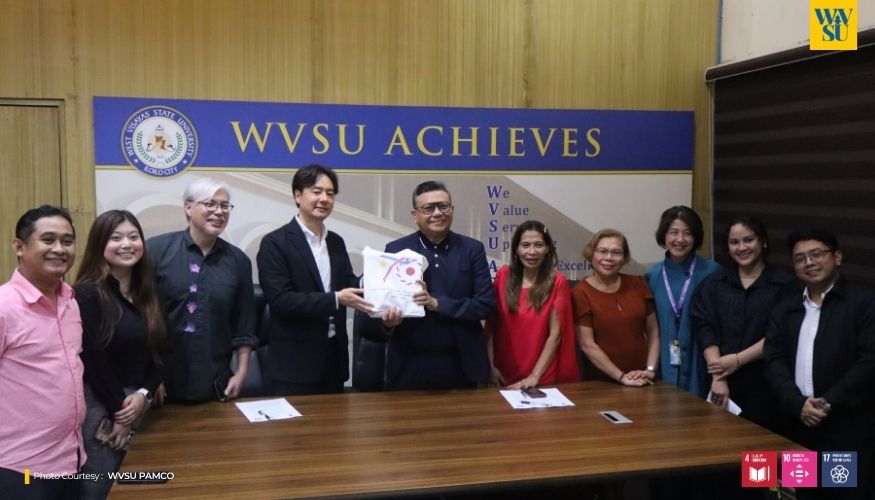
WVSU, Japan Foundation Manila strengthen partnership for international Japanese language conference
West Visayas State University (WVSU) strengthened its international academic partnerships as it welcomed officials from The Japan Foundation, Manila (JFM) and the University of the Philippines Asian Center for a courtesy visit and ceremonial signing of a Letter of Agreement (LOA) on July 27 at the WVSU Boardroom.
The signing formalized the collaboration for the upcoming international conference, “Japanese Beyond Words,” which WVSU’s Department of Language Studies under the College of Arts and Sciences will host in partnership with The Japan Foundation, Manila and the UP Asian Center on Sept. 25 to 26, 2026. The conference will coincide with the 41st Philippine Nihongo Teachers’ Forum and will be held at the QH Building.
The ceremony followed an ocular inspection of the conference venue and discussions on logistical and program preparations. Representatives from the partner institutions also met with University officials to strengthen coordination and reinforce their shared commitment to advancing Japanese language education and international academic collaboration.
Leading the delegation from The Japan Foundation, Manila were Deputy Director Yuta Kaneko, Senior Japanese Language Education Adviser Yuko Fujimitsu, Program Coordinator for Global Partnership, Arts and Culture, and Japanese Studies Ma. Jasmine Ray Latina, Nihongojin Support Team Program Coordinator Jan Jesster Lanting Carpio, and Karl Ian Cheng Chu from the UP Asian Center.
The Japan Foundation, Manila emphasized that the visit was intended in preparation for the conference and to deepen the partnership and friendship between the institutions while reaffirming their commitment to promoting Japanese language education in the Philippines.
The Department of Language Studies initiated the partnership through the ceremonial LOA signing, recognizing the collaboration as a key milestone in ensuring the successful staging of the international conference and expanding WVSU’s global academic engagements.
The partnership supports WVSU’s continuing internationalization efforts by fostering cross-cultural understanding, promoting language education, and creating opportunities for academic exchange with international institutions. The initiative advances the University’s commitment to producing globally engaged graduates while contributing to Sustainable Development Goals 4 (Quality Education) and 17 (Partnerships for the Goals). -
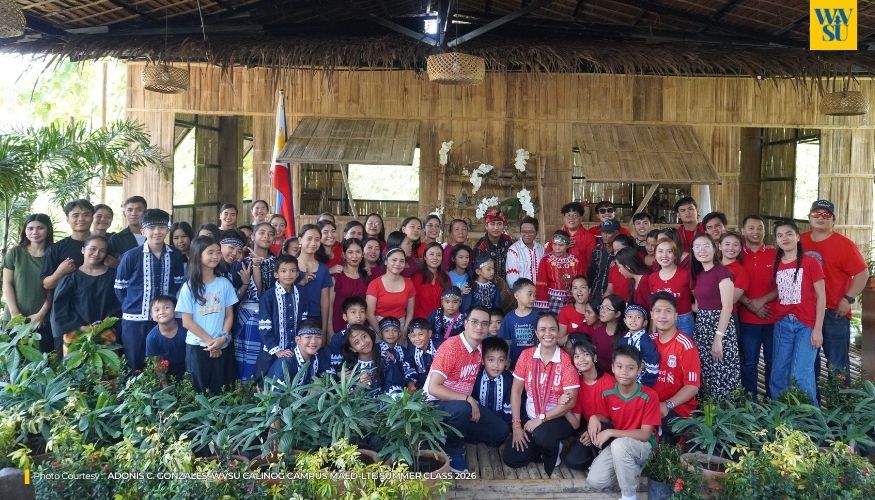
WVSU Calinog students immerse in Panay Bukidnon culture
Thirty-three graduate students from the West Visayas State University (WVSU) Calinog Campus strengthened their understanding of culturally responsive language education through a community immersion with the Panay Bukidnon in Tapaz, Capiz, demonstrating how experiential learning can bridge academic theory with Indigenous knowledge and cultural preservation.
The students, enrolled in the Master of Arts in Education, Major in Language Teaching-English (MAEd-LTE) Summer Class 2026, participated in “Pamadbad: A Cultural Immersion and Storytelling Program” on July 19 at The Harimuyngan nga Turun-an Academy, Inc. (HTAI).
The activity formed part of the graduate courses LNG 514: Cross-Cultural Communication and LNG 518: Psychology of the Reading Process, providing future language educators with opportunities to engage directly with Indigenous learners, cultural practitioners and community elders. Through the immersion, the students gained firsthand experience in applying culturally responsive teaching strategies beyond the traditional classroom.
The initiative reflects WVSU’s commitment to transformative education that values diversity, strengthens community partnerships and promotes inclusive learning. It also supports the United Nations Sustainable Development Goals, particularly SDG 4 (Quality Education) by promoting equitable and culturally relevant education, SDG 10 (Reduced Inequalities) by recognizing Indigenous voices in learning, and SDG 11 (Sustainable Cities and Communities) through the preservation and appreciation of cultural heritage.
One of the program’s highlights was a series of storytelling sessions conducted by the graduate students for HTAI learners. Before the immersion, the students developed instructional materials incorporating Indigenous narratives, local traditions and contextualized learning experiences to make literacy instruction more meaningful and culturally relevant.
Using storybooks, visual aids and interactive reading activities, the graduate students facilitated lessons that enhanced reading comprehension, oral communication and creativity while allowing learners to see their own identities and experiences reflected in the learning process. The activity demonstrated how language education becomes more engaging when it is rooted in the culture and lived experiences of the community.
The immersion also introduced participants to the living heritage of the Panay Bukidnon through conversations and cultural demonstrations led by young cultural master Rennel Lavilla together with Panay Bukidnon cultural masters and community elders.
Students observed traditional performances featuring the subing, a bamboo mouth harp; the agong, a suspended gong; and the tambol, a drum crafted from the skin of the Visayan spotted deer. The cultural bearers also performed the Binanog, a dance that imitates the movements of the hawk, and shared chants from the Sugidanon, including the epic of Labaw Donggon, one of the country’s most treasured oral literary traditions.
The exchange allowed participants to appreciate how language, oral literature, music and performance remain central to preserving Indigenous identity and passing cultural knowledge from one generation to the next.
The program was further enriched by performances from the Padang Sibagun Chorale and HTAI learners, who showcased Ilonggo folk songs and Indigenous cultural presentations that highlighted the vitality of Panay Bukidnon traditions among today’s youth.
Beyond storytelling and cultural performances, the WVSU graduate students immersed themselves in the community’s culinary traditions. Guided by local cultural bearers, they learned the preparation of bayi-bayi, a Visayan delicacy made from pounded young glutinous rice, grated coconut and muscovado sugar using traditional tools. They also observed the preparation of binakol nga manok sa kawayan and the traditional extraction of sugarcane juice, gaining a deeper appreciation of Indigenous knowledge systems and sustainable food practices.
The immersion concluded with a communal meal featuring native dishes prepared at Harimuyngan nga Padapunan, reinforcing the role of food as an expression of cultural identity, history and community.
The program was made possible through the support of the WVSU Calinog Campus administration, the Local Government Unit of Calinog and the College of Education Graduate School. Participants also expressed their gratitude to Dr. Ronilo G. Berondo, president of The Harimuyngan nga Turun-an Academy, Inc., the HTAI learners and the Panay Bukidnon community for sharing their traditions, knowledge and hospitality.
The cultural immersion was led by Dr. Marie Candy L. Celeste, director of Academic Affairs, Indigenous Peoples Education coordinator and facilitator of LNG 514, together with Mr. Adonis C. Gonzales, facilitator of LNG 518.
For the graduate students, the experience underscored that effective language education extends beyond textbooks and lecture halls. By engaging directly with Indigenous communities, they gained a deeper appreciation of the relationship between language, culture and identity while strengthening their commitment to becoming educators who foster inclusive, culturally responsive and community-centered learning.
As WVSU continues to champion experiential learning, initiatives such as “Pamadbad” demonstrate how higher education can empower future educators to preserve cultural heritage, promote inclusive education and build stronger partnerships with communities, advancing the University’s mission of developing lifelong learners and agents of societal transformation.